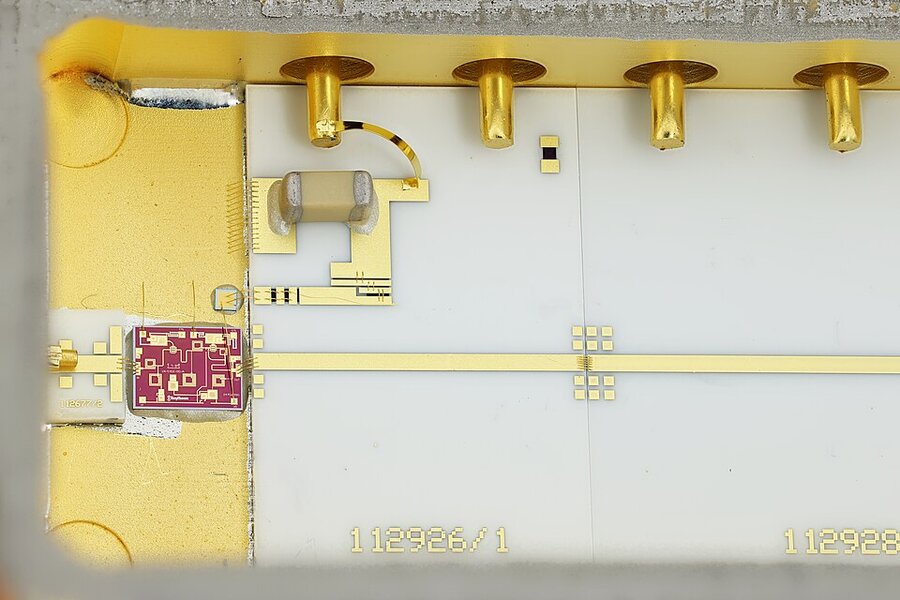
A power amplifier is used in each wireless system. It amplifies weak signals and carries them further, so that they can be heard. Recently, GaN amplifiers are the most popular choice for this application.
The first two letters, Ga, is for Gallium and the last two, N, is for Nitrogen. It is a semiconductor material that has a higher power, voltage and temperature withstand than the traditional silicon material. This guide provides an introduction to the basics of GaN amplifiers, how engineers select amplifiers, and applications. You will also know how to select the appropriate one for your project.
What Is a GaN Amplifier?
An amplifier that uses gallium nitride transistors. The majority of them employ a device known as a high electron mobility transistor (HEMT).
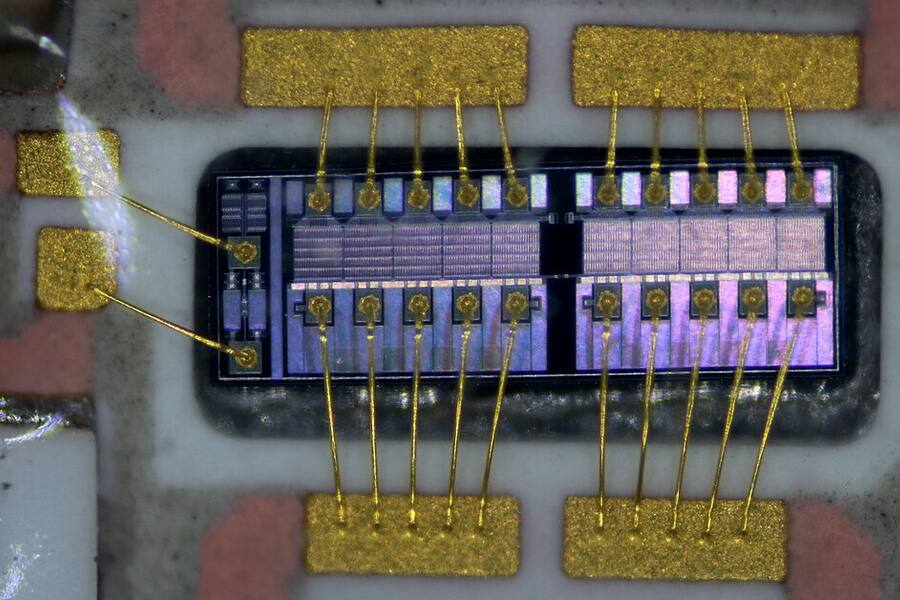
For related reading, see our guides to the Pass Labs amplifiers, the Yamaha M2 amplifier and how to choose an amplifier for your speakers.
Simply put, an amplifier is a gadget that amplifies a smaller input signal into a larger output signal. What is the function of the transistor that is inside? That transistor can operate at higher frequencies and voltages, and waste less energy as heat, in gallium nitride.
The majority of the GaN amplifiers in development are aimed at replacing obsolete silicon and gallium arsenide (GaAs) amplifier designs. Amplifiers made of GaN are frequently used in radio frequency (RF) and microwave circuits. It is also used in power electronics, such as compact fast chargers.
How GaN Amplifiers Work
In the heart of it is a GaN HEMT. The device has a thin film of aluminium gallium nitride (AlGaN) on top of a layer of gallium nitride (GaN). The two overlap to form a sheet of ultra-fast electrons. This is known as a two-dimensional electron gas by engineers.
For wider engineering news on this technology, see the gallium nitride coverage at IEEE Spectrum.
These electrons flow rapidly, and carry high current. This enables a transistor to operate quickly and deliver a lot of power from a small size of transistor.
Widely speaking, another crucial thing is “wide band gap. The band gap of GaN is around 3.4 eV while that of silicon is around 1.1 eV. The greater the separation the greater the material can withstand a high electric field.
That’s what makes the higher voltage designs based on GaN. Some GaN RF components will operate at supplies such as 28 V or 48 V as required by the specific part.
A benefit practice is a higher voltage. The device has a lower power requirement for the same output. A good thing in less current is lower losses and it’s more convenient to match the amplifier to the rest of the circuit.
GaN-on-SiC vs. GaN-on-Si: What Is the Difference?
The base material used for not all GaN amplifiers is the same. The gallium nitride layer is deposited on a substrate, which in turn impacts the substrate’s cost, heat-handling, and performance. Silicon carbide (SiC) or silicon (Si) are the most popular.
GaN-on-SiC
The silicon carbide is a good thermal conductor. This renders GaN-on-SiC for higher power and frequency applications – such as radars and cell phone base stations – suitable. The compromise is cost, as SiC wafers cost more.
GaN-on-Si
Silicon Wafers are less costly, and they are available in larger sizes. This reduces the prices large volumes of products. However, the thermal conductivity of silicon is not as good as silicon carbide. The GaN-on-Si option is preferred for applications that have lower power or cost requirements.
Key Benefits of GaN Amplifiers
GaN has several clear advantages over older technologies. Here are the ones that matter most in real designs.
There are a number of clear benefits of GaN over previous technology. These are the ones which are crucial in real design.
High Power Density
The power from a GaN amplifier of identical size is determined to be much more than that of a GaAs amplifier. This enables engineers to design smaller modules or get more performance from a specific amount of space.
Better Efficiency
Efficiency is the ratio of the power transferred into a form useful for some purpose to the power supplied. We can create very efficient GaN devices, thanks to the design of Doherty amplifiers. The higher efficiency will provide a lower load on cooling and lower energy expenses.
Wide Bandwidth
GaN transistors can be used in very high frequency. It is also applicable with a number of bands for those systems where a vast number of bands must be covered at once such as modern communication and electronic warfare equipment.
Good Heat Tolerance
The wide band gap improves the reliability of GaN devices at high temperatures. While good thermal design, as always, is still required, GaN provides more design flexibility.
Where GaN Amplifiers Are Used
GNumerous real products employing the GaN technology have been launched. The following are the most popular areas.
5G and Cellular Networks
Currently, network equipment manufacturers are using GaN amplifiers in base stations radios, where both efficiency and bandwidth are important. Energy savings at thousands of locations are achieved by higher efficiency. Lighter radio units also can be achieved with smaller amplifiers.
Radar and Defense
The GaN amplifiers are used in the modern radar systems to produce strong radiated signals in a small package. Active electronically scanned array (AESA) radars employ hundreds to thousands of small amplifiers and power density and efficiency are important. The broad bandwidth is also desirable to electronic warfare systems.
Satellite Communications
Satellites and ground terminals must be efficient and reliable amplifiers. These requirements are met by GaN. With limited cooling options, less wasted heat is particularly beneficial.
Fast Chargers and Power Supplies
In addition to power switching, GaN transistors are employed in power conversion. They change very rapidly allowing for smaller transformers, and smaller chargers. This is a similar application of the same material but different to RF amplification.
GaN vs. LDMOS vs. GaAs: Quick Comparison
Choosing a technology often means comparing a few options. This table gives a simple overview.
|
Feature |
GaN |
LDMOS |
GaAs |
|
Power density |
Very high |
Moderate |
Lower |
|
Efficiency |
High |
Good |
Good at low power |
|
Frequency range |
Wide, up to high microwave bands |
Mostly lower frequencies |
High frequencies |
|
Cost |
Higher than LDMOS |
Lower |
Moderate |
|
Typical use |
5G, radar, satellite |
Older and lower-frequency base stations |
Handsets, low-noise and lower-power circuits |
No single option wins in every case. LDMOS is mature and low cost. GaAs works well in low-power and low-noise designs. GaN stands out when you need high power, high efficiency, and wide bandwidth.
Common Challenges to Plan For
GaN amplifiers are very powerful, but not perfect. Knowing your limits means that you will not put yourself in a situation that you will end up in trouble.
- Cost: GaN parts typically are more expensive than LDMOS, particularly GaN-on-SiC.
- High power density is what causes lots of heat in a small area – Heat management. A good heatsink and a good thermal path is required.
- Trapping effects: Charging within the device can alter the performance over time or following a signal burst. Helpful device models and bias control.
- Linearity: Most wireless standards have very strict requirements on the linearity of the signal. Digital predistortion is often applied by the designer in order to correct the distortion.
How to Choose the Right GaN Amplifier
WIf you are comparing amplifiers using GaN, you need to know what application you’re using it for, and then go through a quick checklist.
- Frequency range: Make sure the amplifier can be used on your frequency range.
- Output power: Choose a device with enough power to meet the largest demands.
- Gain: Check whether there is a need for extra driver stages to get full output.
- Efficiency: More efficient – less energy lost, less cooling required.
- Distortion specs to review if using complex modulation: Linearity.
- Supply voltage: Ensure its voltage will work with your power supply.
- Size, mounting and heat dissipation issues are related to package and thermal design.
- Consideration of cost and performance: Choose GaN-on-SiC for the highest performance, or GaN-on-Si for the lowest cost.
Please read the data sheet carefully. Test the amplifier in your own setup if possible – actual performance will be dependent on your circuit and cooling.
The Future of GaN Technology
However, the demand for GaN amplifiers should continue to rise with the expansion of networks, and upgrades in radar systems. The research on 6G is also based on higher frequency bands where GaN properties could be beneficial.
Meanwhile, manufacturers are striving to reduce costs and increase reliability. With the maturity of manufacturing, GaN could find an expanded market for products other than those in the current high-end application list.
Final Thoughts
The GaN amplifier has changed the way that high power RF systems are designed. They have high power in a compact size, are efficient and have high frequency ranges. For this reason, they are now much more visible in the 5G, radar, and satellite equipment.
Not all of them are suitable for all projects. There are a number of considerations to be taken into account when it comes to cost, heat, and linearity. However, for high-performance designs, GaN will not be outdone.
Start with the frequency, power and efficiency needs. Verify options, data sheets and test in own configuration. Once the plan is established, then the next design might benefit from the use of GaN amplifiers.
FAQs
What are GaN amplifiers used for?
They are used mainly in 5G base stations, radar systems, satellite communications, and electronic warfare equipment. The same material also powers compact fast chargers and other power electronics.
Are GaN amplifiers better than silicon amplifiers?
In high-power and high-frequency designs, GaN usually performs better. It offers higher power density and efficiency. Silicon, especially LDMOS, can still be the better pick when cost matters most or the frequency is low.
Why is gallium nitride so efficient?
Its wide bandgap and fast electrons allow high voltage operation and quick switching. This reduces energy lost as heat for a given output power.
Do GaN devices get hot?
They can, because they pack a lot of power into a small area. That is why thermal design matters. GaN-on-SiC helps because silicon carbide moves heat away well.
Are GaN devices more expensive?
Usually yes, compared with LDMOS. Prices vary by type and volume. GaN-on-Si can lower the cost for many designs.
What is the difference between GaN-on-SiC and GaN-on-Si?
GaN-on-SiC handles heat better and suits high-power RF work, but it costs more. GaN-on-Si is cheaper and suits high-volume or lower-power products.