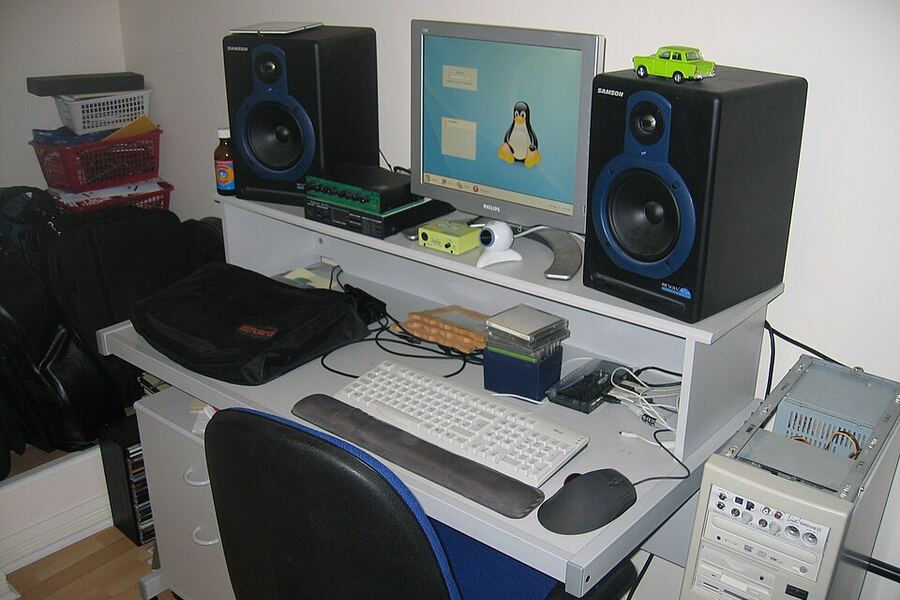
Near speakers are made to be heard near, around 3-5 feet. Near speakers offer better audio in smaller spaces where music is mixed, recorded at home or video edited than larger floor standing speakers.
It's simple, this is why. A little further away, the direct sound is more clearly heard, and the echo of the room is less.
Near speakers are explored, their working and how to choose a good pair for your needs. Besides that, there's a chance to find out where they go and what to avoid.
For related reading, see our guides to powered studio monitor speakers, 2 channel speaker placement and powered desktop speakers.
What Are Near Speakers?
Nearfield speakers are small speakers that are placed close to the listener. The speakers are seated at about an ear level and you are seated such that you can reach the speakers.
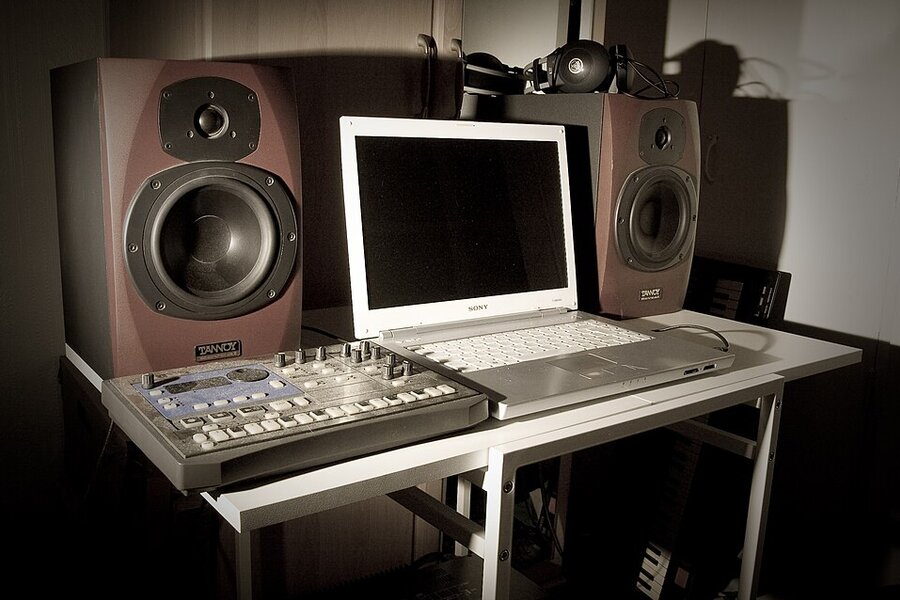
The majority of the models are small. They may attach to a desk, stand or shelf behind your keyboard. Many are “powered”, that is the amplifier is built into the cabinet.
For musicians, podcasters, streamers, gamers, and video editors, near speakers are a popular option. These are also great for those who want to enhance the audio of their computer, but do not want to put a big investment into a full-fledged hi-fi system.
For more audio coverage, see TechRadar.
How Near Speakers Work
The sound of each room is different. The sound bounces off walls, ceilings and floors, and is added to the direct sound from the speaker to your ears.
Speakers near: ears close to speaker. The direct sound is louder than reflections and is received first. That provides you with a purer and clearer picture of the audio.
So, near speakers are perfect for small rooms or untreated rooms. They cannot change the room issues, but make them less apparent to the listener's perception.
Direct Sound vs. Reflected Sound
Direct sound is the sound from the speaker directly to you. Reflected sound reflects off surfaces first.
Strong reflections may cause a dull sound in the voice and an uneven bass. If you listen carefully, the direct sound is in control. The key of the near field design is to keep the distance between the two elements short.
Who Should Use Near Speakers?
Close range speakers benefit lots of types of listeners. The most common groups are listed below.
Home Studio Creators
If you're recording, mixing or producing music, you want to hear the small details in the vocals, drums and effects then small studio monitors are a great way to record, mix and produce music. If you are accurate, the mix should sound good on headphones, phones and car stereos.
Desktop and PC Users
Small desktop speakers can also be used to replace a laptop with weak speakers or the cheap plastic speakers. Music, films, and video calls are enhanced in terms of quality and sound.
Ability to edit videos and podcasts.
Dialogue should be clearly audible at the editors' fingertips. Good speakers will show the viewer sound effects of background noise, hard voices, and sound changes of volume before they hear them.
Small-Room Listeners
Bedrooms and apartments can be problematic with large speakers. Compact models offer quieter operation at lower levels, which will help to protect neighbours and family.
Near Speakers vs. Regular Home Speakers
The regular Bluetooth or hi-fi speaker is generally a sound tuned to be sensational. They can be adjusted to make bass or treble more prominent to give an initial impression of "more bass" or "more treble.
Speakers that are positioned in the studio style provide more neutral sounds. This translates to less colouring and more honesty. It might sound less exciting but that's what you hear in the recording.
The distance is another difference. The sound waves have to combine in order to get to you, so you must have room to hear big speakers. Nearfield designs are meant for short-distance applications.
Create and edit audio using a neutral pair. If you're just looking for something to listen to for casual listening, then a pair with more warmth and flavor may be better.
How to Choose the Best Near Speakers
Shopping becomes easier when you focus on a few key points.
Check the Woofer Size
The woofer plays low and mid frequencies. Common sizes range from 3 to 8 inches. Smaller woofers suit desks and tight rooms. Larger woofers give deeper bass but need more space and distance.
For most desks, a 4-inch or 5-inch woofer is a practical starting point.
Decide Between Powered and Passive
Powered near speakers have a built-in amplifier. You plug them in, connect your source, and start listening. Passive models need a separate amplifier, which adds cost and cables.
For most people, powered models are simpler and better value.
Look at Inputs and Connections
Check what your devices can connect to. Common inputs include XLR, balanced 1/4-inch TRS, RCA, and 3.5 mm. Balanced connections help reduce noise, especially on longer cables.
Some models also include USB or Bluetooth. These are handy for casual listening, but wired inputs are usually better for work.
Understand Frequency Response
Frequency response shows the range of sound a speaker can reproduce. A wider range often means more detail, but a smooth, even response matters more than big numbers.
Read reviews that include measurements or hands-on listening notes. They give you a more honest picture than a spec sheet alone.
Set a Realistic Budget
Good near speakers exist at many price levels. Budget pairs work well for beginners and everyday listening. Higher-priced pairs usually offer finer detail, better build quality, and more precise sound.
Spend most of your money on the best pair you can afford. Save a little for stands or isolation pads, since they improve results.
Look for Room Controls
Some models include bass, treble, or placement switches. These help when speakers sit close to a wall or corner. They are not essential, but they can be useful in small rooms.
How to Place Near Speakers for the Best Sound
Placement matters as much as price. Even great near speakers sound poor in the wrong spot. Follow these steps for a better result.
Form an Equilateral Triangle
Place the two speakers and your head at the three points of a triangle. The distance between the speakers should roughly equal the distance from each speaker to your ears.
This layout creates a stable stereo image. Singers and instruments seem to appear between the speakers instead of inside one side.
Set Tweeters at Ear Height
The tweeter plays high frequencies, which are very directional. Line it up with your ears. If the speakers sit too low, use stands or angled pads to lift them.
Angle the Speakers Slightly Inward
Point both speakers toward your head. This small inward angle is called toe-in. It sharpens the center image and makes vocals easier to locate.
Adjust little by little. Stop when the sound feels focused without sounding narrow.
Keep Space from Walls
Walls close to the speakers can boost bass and make it boomy. Leave some space behind them, ideally several inches or more. This matters most for models with rear-facing ports.
Isolate the Speakers from Your Desk
Desks can vibrate and add false bass. Foam pads or small stands separate the speaker from the surface. The result is tighter, cleaner low end.
Common Placement Mistakes to Avoid
A little mistake can have a negative impact on your voice. Beware of these:
- Position one speaker close to a wall, and the other further away.
- Speakers are too far apart (space between speakers),
- Covering the front of speakers with monitor or boxes
- Use the height setting to adjust the height of speakers.
- Eating with sound intensities that are very high in a small room.
Practice these first and then purchase new equipment. The speaker is not responsible for the lion's share of sound issues, he/she is responsible for setup.
Easy Ways to Improve Room Sound
A full studio is not essential to achieve good results. Small changes help.
You can get a carpet that will minimize reflections off the floor. Curtains turn hard window glass to soft. Absorbing material such as bookshelves diffuses sound instead of reflecting it. Acoustic panels can be mounted at side-wall reflection points for improved clarity for better control.
Begin with simple, listen and change one thing at a time. This will help you to listen to what each adjustment is doing.
Final Thoughts
You don't always need to have a large room or large budget, in order to have good sound. Whether you're mixing a track, editing a video or just enjoying music at your desk, near speakers provide you with clear and direct audio in the space you already have.
Begin with the proper size and a powered pair and then concentrate on placement. A good design triangle, ear height tweeters and spacing between the tweeters and walls can do more to improve the sound than any modification.
No need to run, it's OK to walk slowly and listen. You should get more detail, balance and the sound you expect in your music or videos if your setup is right.
FAQs
What are near speakers used for?
Near speakers are used for close-range listening in places like home studios, desks, editing setups, and small rooms. They help you hear sound clearly with less room interference.
How far should I sit from my speakers?
Most people sit about three to five feet away. At that range, the direct sound is strong and the room has less influence. Always follow the maker’s advice for your model.
Can I use studio-style speakers for gaming and music?
Yes. Many people use them for gaming, movies, and everyday music. They sound more neutral than typical consumer speakers, so some listeners find them less “exciting” at first.
Do I need a subwoofer?
Not always. Many compact pairs sound full enough for a desk or small room. If you want deeper bass or work with bass-heavy music, a subwoofer can help.
Are powered speakers better than passive ones?
Powered speakers are easier to set up because the amplifier is built in. Passive speakers can work well but need a matching amplifier. Most beginners do better with powered models.
Where should I place speakers on a desk?
Put them on either side of your screen, at ear height, and angled toward you. Keep them away from walls and use pads or stands to reduce desk vibration.