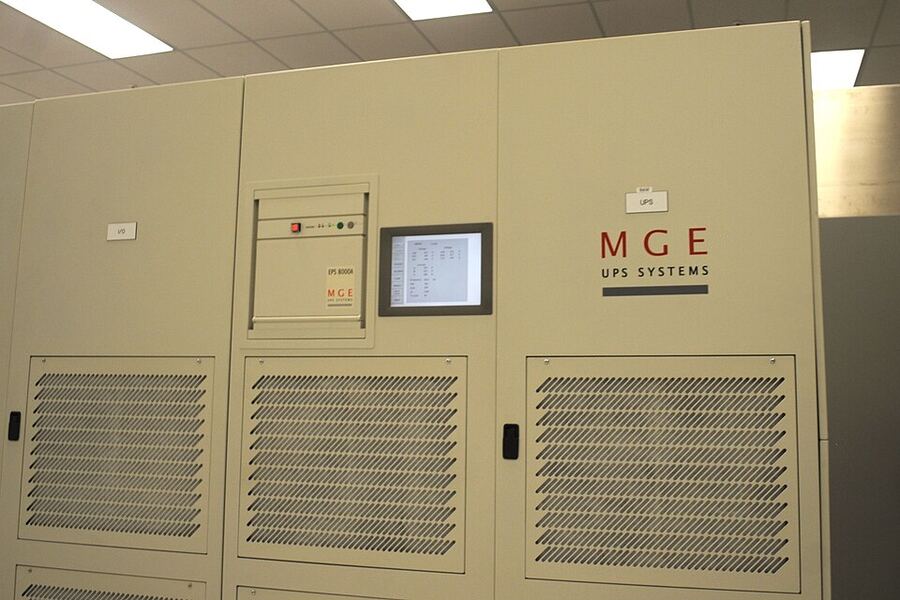
A double conversion online UPS protects equipment when there is no warning of a power problem. Without a brief power loss, surge or loss of voltage, there could be a server crash, data corruption or damage to sensitive equipment.
To avoid this, a double conversion online ups is made. Provides uninterrupted and clean power to your equipment even when power is out.
In this guide, you'll be able to get some information about a double conversion on-line ups, its usefulness and how to choose a right one. Language is not too difficult to understand and you can make an informed purchase.
For related advice, read our guides to choosing an amplifier for your speakers, GaN amplifiers and Pass Labs amplifiers.
What Is a Double Conversion Online UPS?
A double conversion online ups is a power backup system which continuously provides electricity to your equipment through its inverter. Your devices do not go directly to the power source.
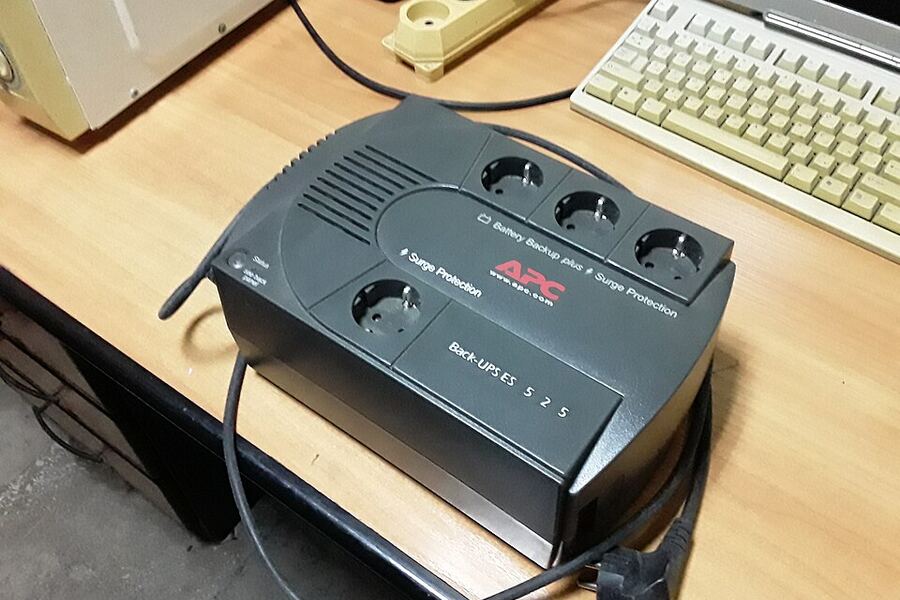
Given the two power conversions in the unit, it was named after them. AC power is initially converted to DC power. Then this DC power is converted back to AC.
This will help protect your equipment from most issues on the incoming line. These types are defined as voltage and frequency independent (VFI) in the international standard IEC 62040-3.
For more technology news and explainers, see Wired.
It can also be referred to as the “true online UPS.” Both are often used to refer to the same design.
How a Double Conversion Online UPS Works
This process can be summarized in 4 steps:
- Rectifier: The AC voltage of the power source is converted to AC voltage in the UPS.
- The inverter operates from the DC bus and battery and charges the batteries.
- Inverter: Produces a fresh and pure AC wave and supplies to devices.
Static bypass: If the UPS is overloaded or fails, the load can be transferred to the utility power using the bypass.
Normally, the batteries are charged and ready to use. In the event of a power outage, the batteries will continue to send power to the inverter. The inverter is already on so there is no switching to do.
As such, a double conversion online ups does not have a transfer period. Never any power loss for your equipment.
Key Parts Inside the UPS
You can trust spec sheets while reading them, since you know the primary parts.
- Rectifier/Charger: Converts AC to DC to keep batteries charged.
- Battery bank: Storage of energy for a short time when the power is out. The majority of the units are sealed lead-acid or lithium battery.
- Inverter: Stable ac output and controlled voltage and frequency.
- Static bypass switch: Used as a second circuit to the load if there are faults or overloads.
- Maintenance bypass: enables a maintenance person to maintain the UPS without disconnecting the load.
- Monitoring card: Events and reports through network.
Main Benefits of a Double Conversion Online UPS
This design is popular for one reason: it protects against more problems than other UPS types.
Zero transfer time. There is no switching delay when the grid fails. This matters for servers, storage systems, and network gear.
Stable voltage and frequency. The inverter rebuilds the power wave. Your equipment gets a steady output, even when the input is poor.
Wide protection. It helps guard against outages, sags, surges, electrical noise, and frequency swings.
Better generator compatibility. Generator output can vary in voltage and frequency. A double conversion design smooths those changes before they reach your load.
Strong monitoring. Many models offer remote alerts, battery health data, and runtime estimates.
Room to scale. Larger models often support parallel or redundant setups, so you can grow without replacing everything.
For critical loads, a double conversion online ups offers the strongest protection among common UPS designs.
Double Conversion vs Line-Interactive vs Standby UPS
Many buyers wonder if they really need the top tier. This table shows how the three common types differ.
|
Feature |
Standby (Offline) |
Line-Interactive |
Double Conversion Online |
|
Normal power path |
Utility power |
Utility power with voltage correction |
Inverter, always |
|
Transfer time |
Short switch delay |
Short switch delay |
None |
|
Power conditioning |
Basic |
Moderate |
Full |
|
Frequency protection |
Limited |
Limited |
Strong |
|
Typical cost |
Lowest |
Medium |
Highest |
|
Best for |
Home PCs, basic devices |
Small offices, networking |
Servers, critical systems |
The tradeoff is price. A double conversion online ups usually costs more than the other two types, and it also uses a bit more energy to run.
Where a Double Conversion Online UPS Is Used
This type of UPS is suitable for sites where a loss of power would cost or be hazardous. Common uses include:
- Data centers and server rooms: Safeguards servers, storage and switches.
- Telecom/Network sites: Keeps communication systems running.
- Healthcare facilities: Sensitive diagnostic and monitoring equipment and the system needs to meet manufacturer's and local safety standards.
- Industrial control systems: Guards controllers, sensors and automation equipment.
- Laboratories: Sends clean power to instruments that need it.
- Transaction systems: Bank and retail systems.
Additionally, double conversion online ups are perfect for locations that have not a stable power supply or a power generator.
Drawbacks to Consider
All products have their own drawbacks. To understand the following possible disadvantages:
- Higher upfront cost. Exceeds the cost of a line-interactive model.
- Energy loss. There is some waste power and heat generated due to constant conversion. New units, on the other hand, are much more efficient than old ones and always refer to the manufacturer's datasheet.
- Cooling needs. There should be good airflow or air conditioning with the increasing heat.
- Fan noise. Some UPS's are quieter than other more basic designs.
- Battery replacement. Batteries need to be replaced in a timely fashion.
Some models have an “eco mode” or high efficiency mode. If the source is clean, it does not require power and consequently conserves energy. This is the compromise of less isolation from the grid, so take into consideration how sensitive the load is.
How to Choose the Right Double Conversion Online UPS
A good choice starts with your real needs. Follow these steps.
1. Calculate your load. Add up the power draw of all connected devices. Check both watts and VA, since UPS units have limits for each.
2. Add headroom. Do not size the UPS at 100% of the load. Leaving extra capacity for growth and safety is common practice.
3. Decide on runtime. Ask how long you need to run on batteries. Some sites need only a few minutes to shut down safely. Others need longer, or a generator.
4. Pick the battery type. Lead-acid batteries cost less upfront. Lithium-ion batteries usually last longer and take less space, but cost more.
5. Choose the form factor. Rack-mount units suit server rooms. Tower units suit small offices and floor placement.
6. Check input and output voltage. Make sure they match your local supply and your equipment.
7. Look for bypass options. A static bypass and a maintenance bypass make service much safer.
8. Review monitoring features. Network cards, alerts, and automatic shutdown software save time and reduce risk.
9. Plan for redundancy. For truly critical systems, consider a redundant or parallel setup so one unit failing does not drop the load.
When you compare each double conversion online ups, ask for the efficiency curve, not just the peak number. Efficiency changes with load level, and many systems run well below full capacity.
Simple Maintenance Tips
A little of care prolongs the life of your system and makes no surprises.
- Keep it cool. Early battery wear is largely due to the high temperature.
- Test regularly. Test battery on a regular basis and record results.
- Change batteries as required. Battery life is dependent on usage, temperature and type of battery; please consult manufacturer's instructions.
- Avoid overloading. Do not exceed the rated capacity.
- Vent dust cleaning. When the air can't flow freely, it increases the temperature.
- Update firmware. Updates can be used to correct bugs and enhance monitoring.
- Review alarms. Don't dismiss warnings, even minor ones!
With a good quality double conversion online ups, your equipment can be protected for years.
Final Thoughts
More people would be surprised at the impact of power quality on uptime. The value of the short out is worth more than the cost of the UPS.
Double conversion online ups has no transfer time, no output filtering and great protection against the worst aspects of the grid. More costly and needs a cooling setup, but if downtime will cost more than the cost of an expensive server, network, lab, etc. then it's worth it.
First, you should measure the load, then select the run time, battery type and bypass features based on your risk. Follow easy maintenance and your system will be in place when the power goes out.
FAQs
What is a double conversion online ups?
It is a UPS that converts incoming AC to DC, then back to clean AC, and powers your equipment from the inverter at all times. This gives you steady output and no switching delay during an outage.
Is a double conversion online ups better than a line-interactive UPS?
It offers stronger protection, especially against frequency problems and noisy power. However, “better” depends on your needs. A line-interactive UPS is often enough for small offices and home setups, while critical systems benefit from the online design.
Does an online UPS really have zero transfer time?
Yes, in normal double conversion mode. The inverter is already supplying the load, so the batteries simply take over the input side. If you enable eco mode, a very short switch may occur.
How long do the batteries last?
It depends on the battery type, room temperature, and how often the UPS discharges. Many sealed lead-acid batteries last a few years, while lithium-ion often lasts longer. Check the manufacturer’s rated life for your model.
Does an online UPS use more electricity?
Usually yes, because the power is converted twice. The difference is smaller on modern, efficient models, and eco mode can reduce energy use when the input power is clean.
Can I use this type of UPS at home?
Yes. It can make sense for a home lab, a small studio, or expensive electronics. For basic needs like a desktop computer and router, a cheaper type may be enough.