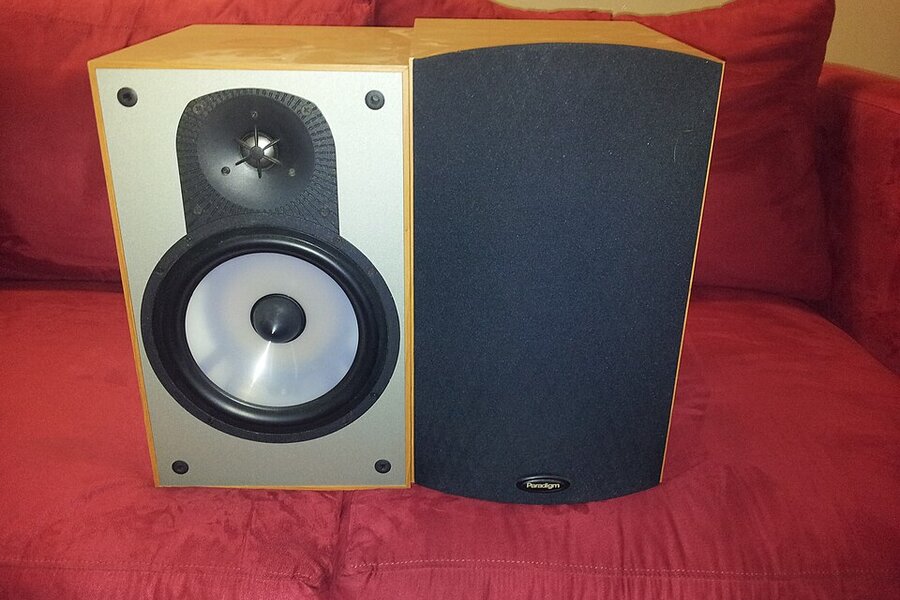
Paradigm reference speakers are high-performance loudspeakers by the Canadian audio company Paradigm, that are engineered to deliver accurate, balanced sound for use in home stereo and home theater applications. The Reference range comprises bookshelf, floor-standing, centre and surround models with similar drivers and tuning. They strive for neutrality, clarity, and the dynamics of a flagship, which is why they are so popular with listeners looking for more precise sound without the price tag.
What “Reference” Means in Speaker Design
A reference speaker in sound reproduction tries to reproduce a recording the way it was recorded. Do not add more bass, brighten treble or color voices.
The paradigmatic reference speakers are governed by this idea. The aim is to produce a natural and neutral sound that can be used in a variety of music genres and film music.
For related reading, see our guides to top speaker brands, 2 channel speaker placement and bookshelf speakers.
Why People Choose Paradigm Reference Speakers
Many of their own drivers are created and built by paradigm, rather than just off the shelf. This allows the company to adjust the tweeter, midrange and woofer to work together.
These are the most popular features that buyers hope to discover:
- Neutral tone: Voices and instruments are not over-done.
- Clear detail: Fine sounds, such as a plucked guitar or cymbals, remain easy to hear.
- Dynamic range: Soft passages and loud peaks are clear and distinct.
- Large sweet spot: High quality sound isn't confined to the single seat.
- Build quality: Cabinets are designed to minimize unwanted vibrations.
Common Technologies Found in the Reference Line
A number of Paradigm models are based on similar design concepts. Specific features are dependent on the model and generation, please see the spec sheet of the speaker you are interested in.
For more reviews and buying advice, see What Hi-Fi?.
Some of the most frequently used paradigm reference speakers have included:
- Short bounce mandols for a smooth and detailed treble response.
- Stiff and low distortion midrange and bass are achieved with mineral filled polypropylene cones.
- Circular tweeter lenses that deliver enhanced room dispersion. Specially designed tweeter lenses for enhanced room dispersion.
Rigid, braced cabinets to preserve the purity of the sound. Rigid, braced cabinets that maintain the purity of the sound.
These features all contribute to a unified sound—one that doesn't sound weak in one aspect and strong in another.
Typical Speaker Types and Their Best Uses
|
Speaker Type |
Best For |
Main Strength |
|
Bookshelf |
Small rooms, desktop setups, stereo pairs |
Compact size, good imaging |
|
Floor-standing |
Medium to large rooms, music-first listening |
Deeper bass, higher output |
|
Center channel |
Home theater dialogue |
Clear speech from the screen |
|
Surround |
Home theater effects |
Immersive sound around you |
|
Subwoofer |
Movies and bass-heavy music |
Low-frequency depth |
Many buyers start with a pair of bookshelf or floor-standing models, then add a center, surrounds, and a subwoofer later.
Choosing the Right Model for Your Room
Room size matters more than most people expect. A large speaker in a tiny room can sound boomy, while a small speaker in a big room may sound thin.
Use this quick guide:
|
Room Size |
Suggested Setup |
|
Small (bedroom, office) |
Bookshelf pair, optional subwoofer |
|
Medium (living room) |
Floor-standing pair or bookshelf pair with subwoofer |
|
Large (open-plan, dedicated theater) |
Floor-standing speakers, center, surrounds, and subwoofer |
Treat this as a starting point. Furniture, ceiling height, and wall materials all change how a room sounds.
What You Need to Pair Them With
Paradigm reference speakers will work best on a quality amplifier or receiver. See the speaker's rated impedance and amplifier power recommendations and compare them to your equipment.
There are a couple of basic guidelines to follow:
- Select an amplifier that will fit the power guidelines of the speaker.
- Use quality speaker cable that is of appropriate size and gauge for the use.
- Maintain a clean source (streamer, turntable or TV).
Even the best speakers can be lost through the use of a mismatched amplifier.
Placement Tips for Better Sound
The placement is free and it can make the most impact. Try these steps:
- Place the speakers approximately the same distance from the listening station, in a kind of triangle.
- Avoid placing them near walls and corners to minimize boomy bass.
- Unscoot them a bit toward your ears (known as “toe-in”) and tweak to preference.
- Position tweeters at ear level.
- Change one thing at a time and listen for change.
With careful placement, paradigm reference speakers can sound much more open and focused.
Strengths and Limitations
No speaker suits everyone. Here is a fair look at what to expect.
|
Strengths |
Limitations |
|
Neutral, natural tone |
May sound less “exciting” than bass-boosted speakers |
|
Strong value for the performance level |
Larger models need space |
|
Works for both music and movies |
Need a capable amplifier to shine |
|
Consistent sound across a model family |
Lineups change, so older models may be hard to find new |
If you prefer a warm or bass-heavy sound, listen before you buy.
How to Audition Before Buying
Specs only tell part of the story. Always try to hear speakers in person.
- Bring music you know well.
- Listen at the volume you normally use.
- Test vocals, acoustic instruments, and a bass-heavy track.
- Ask about return policies if you are buying online.
An authorized dealer can also help confirm which models are currently available, since lineups are updated over time.
Final Thoughts
Paradigm reference speakers are a strong choice for people who value accuracy, balance, and long-term listening comfort. They do not rely on flashy tuning. They aim to present music and movies as the creators intended.
To get the most from them, pick the right size for your room, pair them with a suitable amplifier, and spend time on placement. Most important, listen before you commit. When the sound feels natural and easy to enjoy for hours, you have found the right speaker.
FAQs
Are Paradigm reference speakers good for home theater?
Yes. A matched set with a center channel, surrounds, and a subwoofer gives clear dialogue and a convincing sense of space. They also handle music well, which is a plus for mixed use.
Do Paradigm reference speakers need a subwoofer?
Not always. Floor-standing models can deliver solid bass on their own in many rooms. A subwoofer helps with movies and with smaller speakers that cannot go as low.
Are they suitable for small rooms?
Yes, if you choose compact models. Bookshelf speakers placed on stands, with some space from the wall, work well in smaller spaces.
What amplifier works best with Paradigm reference speakers?
Choose an amplifier or receiver that matches the speaker’s impedance and recommended power range. A quality stereo amp or AV receiver is a good start. Check the manual for your exact model.
How do I know if the sound is “neutral”?
Neutral sound means no part of the frequency range stands out. Voices sound natural, treble is not harsh, and bass is tight, not boomy. Your own ears and a familiar playlist are the best test.
Should I buy used Paradigm reference speakers?
It can be a good way to save money. Inspect the drivers, grilles, and cabinet for damage, and test both speakers at several volumes before paying.