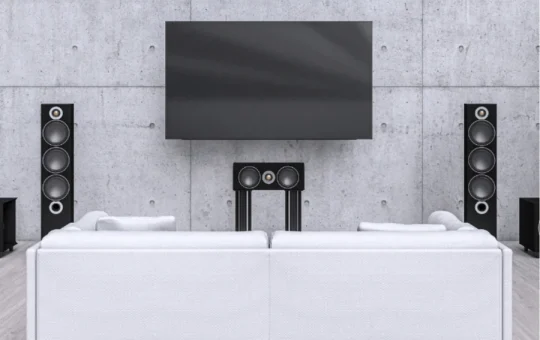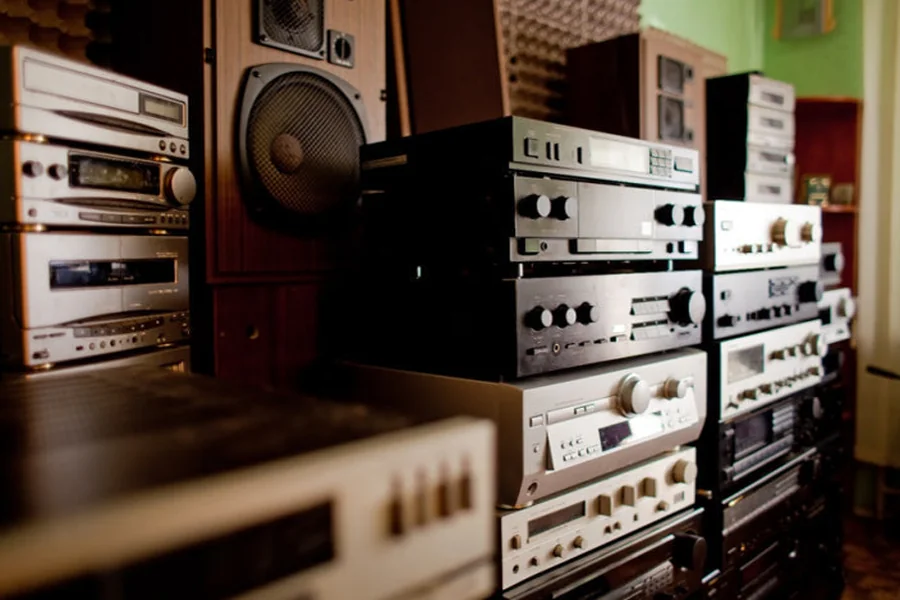
An amplifier is a piece of equipment used to boost a sound signal prior to it being sent to speakers. Speakers are amplified by using an amplifier that determines the quality of the sound produced, the volume of the sound, its clarity and the reliability of the system. Not all amplifiers are loudest. Rather, it ought to match your individual speakers power necessitates, impedance, room size, and listening patterns. If an amplifier and the speakers are in harmony, then the sound is clean, performance is improved, and the listening experience is enhanced.
Why Amplifier And Speaker Matching Is Important
A lot of time is devoted to finding speakers, and less time on the amplifier. In fact, both are part of a system. With the wrong amplifier, the words of even the best speaker can be disappointing.
An equally matched amplifier allows speakers to perform as intended. It produces sufficient power without distortion, provides greater control over the sound.
Some advantages of amplifier matching are:
- Better sound clarity
- The higher the volume, the less distortion.
- Improved bass control
- Longer equipment lifespan
- More consistent performance
While a mismatch may not cause equipment problems, it can reduce sound quality and enjoyment.
Understand Speaker Power Ratings
A one of the initial factors to take into account when selecting an amplifier is your speaker’s power rating.
Most speakers list two important power figures:
- Continuous or RMS Power: The amount of power the speaker can handle continuously.
- Peak Power: This is the highest peak short term power that the speaker can manage during sudden audio peaks.
RMS power is a more useful specification for amplifier matching.
For example:
| Speaker Specification | Value |
| RMS Power | 100 Watts |
| Peak Power | 200 Watts |
For this, an 80 to 150-watt-per-channel amplifier might be a good fit, depending on your listening requirements.
Most new players believe that the lower the power of an amplifier the safer it is. An underpowered amplifier run too loud can cause distortion that can do more damage to speakers than clean power from a well-matched amplifier.
The aim is to generate sufficient clean energy, without continually pushing the envelope on the speaker’s abilities.
Learn About Speaker Impedance
Another important specification is speaker impedance. It is measured in ohms (Ω) and is a measure of the electrical load on an amplifier being exerted by speakers.
Typical Speaker Impedance Ratings are:
- 4 ohms
- 6 ohms
- 8 ohms
The typical home audio speaker has a rating of 6 or 8 ohms.
Amplifiers have a range of suitable impedances for them. Make sure the amplifier is capable of handling the speaker’s impedance level before buying.
For example:
| Speaker Impedance | Amplifier Compatibility |
| 8 Ohms | Most amplifiers |
| 6 Ohms | Many modern amplifiers |
| 4 Ohms | Requires amplifier designed for low-impedance loads |
Speakers with a lower than the amplifier’s impedance may lead to overheating or protection circuit activation.
When connecting speakers, be sure to read the amplifier specifications carefully.
Consider Speaker Sensitivity And Listening Volume
Speaker sensitivity is the amount of power a speaker converts to sound. It is typically measured in the units of decibels (dB).
The higher the sensitivity, the louder the speaker will sound with the same amplifier power level.
Examples:
| Sensitivity Rating | Efficiency |
| 85 dB | Less efficient |
| 88 dB | Average efficiency |
| 92 dB+ | Highly efficient |
Imagine two speakers:
- Speaker A: 85 dB sensitivity
- Speaker B: 92 dB sensitivity
Speaker B will be much louder with the same amount of amplifier power!
This can allow for lower-powered amplifiers to be used with highly sensitive speakers. If the speaker is less sensitive, he/she might need more power to hear at the same volume.
Also take into account your listening routines.
Ask yourself:
- Do you listen mainly at a medium volume?
- Do you like to have loud music sessions?
- See movies with movie intonation?
- If you have a spacious room,?
Those wishing to use amplifiers with louder signals tend to find that a powerful amplifier is the most suitable option.
Match Amplifier Power To Room Size
Many people don’t realize that room size has an impact on the needs of an amplifier.
The sound needs to go farther in the bigger space. Larger rooms require more power for good and clear sound.
Small Rooms
Examples:
- Bedrooms
- Home offices
- Small apartments
Recommended amplifier range:
- 20–60 watts per channel for many speaker setups
Medium Rooms
Examples:
- Living rooms
- Family rooms
Recommended amplifier range:
- 50–100 watts per channel
Large Rooms
Examples:
- Open-concept spaces
- Dedicated home theaters
Recommended amplifier range:
- 100 watts or more per channel
These are approximate guidelines. The sensitivity of the speaker and the preference for listening also have an impact on power requirements.
The larger the room, and the more efficient the speakers, the less power will be required. If the speakers in a tiny room are not very efficient, additional speakers will be required.
The most effective way is to take into account the size of the room along with all the other specifications of the speaker.
Choose The Right Type Of Amplifier
Amplifiers are not all created equal. Knowing these general categories will make it easier to choose.
Integrated Amplifier
An integrated amplifier is a combination of a preamplifier and a power amplifier.
Best for:
- Stereo music systems
- Simpler setups
- Users who want easy installation
Power Amplifier
The power amplifier just amplifies the signal and needs to be used with a preamplifier as well.
Best for:
- Advanced audio systems
- High-performance setups
AV Receiver
An AV receiver will have the surround sound processing as well as amplification.
Best for:
- Home theater systems
- Movie enthusiasts
- Multi-speaker setups
Stereo Receiver
The stereo receiver integrates an amplifier with an included radio tuner.
Best for:
- Traditional two-channel audio systems
In deciding on which of these options you take, consider how you make use of your audio system. For music lovers, integrated amplifiers are more suitable, and for movie enthusiasts, AV receivers are more appropriate.
Additional Features Worth Considering
While power and compatibility are paramount, today’s amplifiers can offer enhancements that make them more convenient and flexible.
Popular features include:
Bluetooth Connectivity
Supports wireless streaming from smartphones, tablets and laptops.
Wi-Fi Streaming
Provides access to music services and network audio playback.
Digital Inputs
Useful for connecting:
- TVs
- Gaming consoles
- Streamers
- Media players
Subwoofer Output
Supports powered subwoofer for enhanced bass performance.
Room Correction Systems
Some AV receivers have a feature that automatically fine-tunes the sound according to room acoustics.
Multiple Speaker Outputs
Great for those who want music in various rooms and/or listening areas.
Don’t over-pay for additional features you may not use. Consider speaker compatibility and the quality of sound first.
Final Thoughts
It’s not difficult to select an amplifier to enhance your speakers. First, review your speaker’s RMS power, impedance and sensitivity. Next, take into account the size of your room, how you listen to music, and the kind of audio system you are looking to construct.
The most important thing is to choose an amplifier that complements your speakers and delivers the clean power you require. Larger chassis do not necessarily equate to better performance. A matched amplifier/speaker system should give you a better result than a poorly optimized system with a powerful amplifier.
With a focus on compatibility instead of marketing claims, you can create an audio system that is balanced, reliable, and will sound great for years of use.