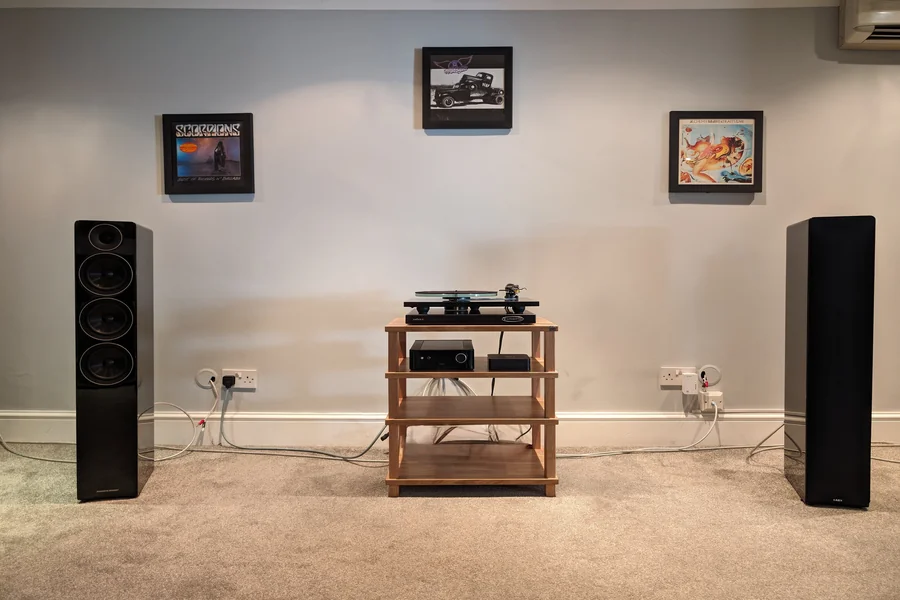
A budget hi-fi sound system is a well matched collection of audio equipment that does not need to be expensive to provide clear, accurate and balanced audio without compromise. Generally, you will need an amplifier, two speakers, a music source (phone, computer, streamer, CD player, or turntable). It is not about the price of the products you get, but about the parts you get that are compatible with each other, speakers and room configuration, and upgrading them one at a time to build a good system on a budget. Even a small budget can provide a good home listening system with proper planning.
Start With A Realistic Budget
The first step to making a hi-fi system is to determine the budget you can afford. The price of a proper hi-fi system does not exist. A viable system can be constructed at several different prices.
Don’t allot funds for the total project; split the money into the various parts. Here is a basic system that requires:
-
- Speakers
- Amplifier
- Music source
- Basic interconnects and speaker cables.
- Optional subwoofer
- It is possible to stream to another device or DAC if desired.
Speakers are something to take into consideration for the beginner. They play a significant role in designating the system and also play a vital role in working with your room.
The “ultimate” solution is to invest more in the parts that impact your listening experience more, and less in the accessory parts that will yield less value. There is no need to have even the most expensive cables, power accessories or decorative equipment to begin.
If your total budget is $500, you may spend about $200-$250 on speakers, $150-$200 on an amplifier and use the rest of your money on your source and cables. This division may vary depending on the equipment you already have.
The key is not to overspend on one piece of equipment and not get enough on another.
Choose The Right Speakers For Your Room
One of the first things you’ll need to decide is who will be your speakers as the size and layout of your room will play a major role in what will work.
For smaller rooms, bookshelf speakers might be a better option. They are small and can produce a good volume of sound if placed properly. The floor standing speakers will provide a bigger presentation and richer bass sounds, but they will need more space.
Consider the setting you will listen in when selecting your listeners.
Big floorstanding speakers don’t require to fill up a small bedroom. Indeed, large speakers can sometimes make it more difficult to get bass, as well. Bigger speakers are suitable for a larger living room.
Also take speaker specifications into consideration. Sensitivity and impedance can be used to check if an amplifier is appropriate. It’s not necessary to know everything about the technical details, but the amp should be able to push the speakers without any difficulty.
The positioning of speakers can also significantly impact the results.
Try to:
- Maintain similar distances between left and right speakers and listener.
- Please do not set speakers directly against the wall unless they are specially designed to do so.
- Use slight head orientation towards the listener when applicable.
- Place the tweeters at ear level, while sitting.
- Whenever possible use stands for bookshelf speakers.
Take some time to experiment with the speaker positioning before investing in costly equipment. You might find that a speaker’s sound can change more than expected when the speaker is moved a few inches.
Pick An Amplifier That Matches Your Speakers
The amplifier gives power to your passive speakers. To get the simplest stereo hi-fi system, an integrated amplifier would be the easiest one as it has a preamplifier and a power amplifier in one unit.
When selecting an amplifier, take into account:
- Power output
- Speaker impedance compatibility
- Available inputs
- Built-in DAC
- Bluetooth support
- Network streaming
- Subwoofer output
- Phono input if you use a turntable
If using a turntable, connect using the phono input.
An amp with a higher wattage doesn’t necessarily equal better sound. Having more power can be advantageous, especially for speakers or rooms that are louder or bigger, but it’s also more important to make sure they’re compatible.
A budget integrated amplifier can be particularly helpful as it means you’re going to have less boxes. This eliminates expenses and simplifies operation.
Before replacing an amplifier, review its specifications, if you already have one. A new pair of speakers can have no problem with your old gear.
Use The Sources You Already Have
The first step to saving money is to not buy an unnecessary music source.
There is no need to purchase a special device to access digital music; a modern phone, tablet, laptop, or computer will do. These devices can be connected directly to the amplifier via Bluetooth, USB, optical or other digital connections, depending on the amplifier.
If your amplifier features a built-in DAC, you might not need an additional DAC at the start.
The same concept can be applied to physical media. CDs may be played on a compatible CD player. If you have an existing record collection, find an amp that has a phono input or purchase a cheap phono preamp.
Streaming is another viable alternative. If a greater level of convenience or integration is desired, a dedicated network streamer can be added later.
Some kind of a useful upgrade path may be:
Talk on the phone or computer, and amplify it through the speakers.
Then as needs change:
Streamer, DAC/integrated amplifier, amplifier, speakers.
This way, you can keep the original system simple and then add to it later on.
Purchase second-hand items with the aim of upkeep.Purchase and upgrade strategically.
Buy Used And Upgrade Strategically
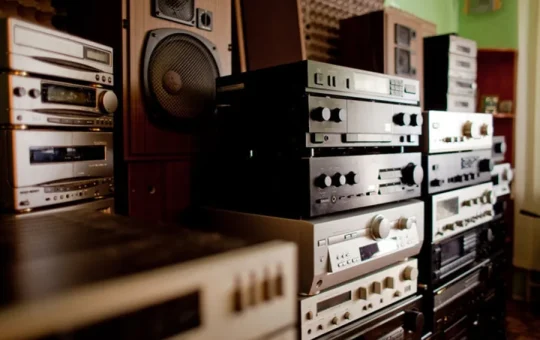
Purchasing used audio gear can extend an all too-short budget. Many hi-fi components are designed to last for many years and therefore older amplifiers and speakers can be useful.
However, when purchasing used it is necessary to exercise extra caution.
Test equipment and inspect physical condition prior to payment, if possible. Check for distortion, crackling, buzzing or dropout of channels. Test volume controls and switches, too.
Check drivers and surrounds for speakers. Inspect for obvious damage and moisture issues.
Older machinery might also come with a set of limitations. May not be Bluetooth, HDMI, USB or have modern streaming capabilities. But this does not mean it’s a bad buy; you just need to be aware of what you are buying.
It is not only digital connectivity that can become obsolete; speaker technology can sometimes be too.
One good tip is to purchase the parts over time.
You could start with:
- Two good speakers.Two good speakers,
- An integrated amplifier that is compatible.
- Your existing phone or computer as the source
- A separate streamer later on.
- If you do need more bass, a subwoofer!
This will avoid you from spending the cash on a characteristic that you might not utilize.
Avoid Spending Too Much On Accessories
It can be easy to overspend on accessories when putting together a budget hi-fi system.
Good speaker cable, good interconnects are required. They do not need to be very costly.
For a typical home stereo system, an adequate cable will suffice, as long as it has the right gauge and length. The same is true with basic RCA or digital cables.
Make sure to allocate your budget to items that can be of real use.
For instance, you can get a better speaker, amplifier, or even room treatment for your money than the most expensive speaker cables.
Another room acoustics is to consider. Reflections may occur from hard surfaces and large empty rooms may make sound less controlled. But you don’t have to use professional acoustic panels.
Some simple adjustments will help:
- Use a rug on a hard floor in a room.
- Install curtains as needed.
- Do not have the listening position directly against a wall.
- Try different distances of the speaker from the walls.
- Furniture to minimize reflections.
No, you don’t have to make your room look like a recording studio. Making a comfortable listening environment is easy.
Create A Simple Upgrade Plan
A good budget system doesn’t have to be a simple one that is the same forever. When you are just starting out one of the advantages is you will find out what you want from your equipment.
Once you’ve been using the system for a while, what is the greatest problem you have with the system?
Speakers can be an obvious upgrade if the speakers sound thin or lack detail. For better bass, a subwoofer may be needed. For those who aren’t always in the mood for music streaming, a streamer might be a better option.
Never upgrade just because of the availability of a newer product.
One possible sequence for upgrades would be:
| Priority | Possible Upgrade | Why It Matters |
| 1 | Speaker placement | Can improve balance without spending money |
| 2 | Speakers | Major influence on overall sound |
| 3 | Amplifier | Important for power and compatibility |
| 4 | Room treatment | Helps control reflections and bass |
| 5 | Music source | Adds convenience and features |
| 6 | Subwoofer | Extends low-frequency response |
| 7 | Accessories | Mostly about reliability and convenience |
This is not a hard rule! The order should be based on your needs.
If your existing speakers are performing well, and you don’t need modern inputs, an upgrade of your amplifier might be more appropriate.
Final Thoughts
The key to having a hi-fi sound system on a budget is making sensible choices. High-quality music doesn’t need to be expensive and require a room full of equipment.
Always begin with a budget and select the components that will fit the budget. Listen carefully to the speakers and the room, as both play a large role in what you are able to hear. When you can, take advantage of the music sources you already have and when it is not possible, you should look into purchasing good used equipment so you can get more bang for your buck.
Most of all, don’t make the hobby a race to purchase additional equipment. It can be more satisfying than a high quality system that is too expensive that doesn’t work well in your room, or too expensive a setup that isn’t matched and positioned well.
To begin, with the basics. Listen for a while. You should only upgrade when you can find a real limitation. This way you’re not spending much and can add on to your hi-fi over time.

2 Comments