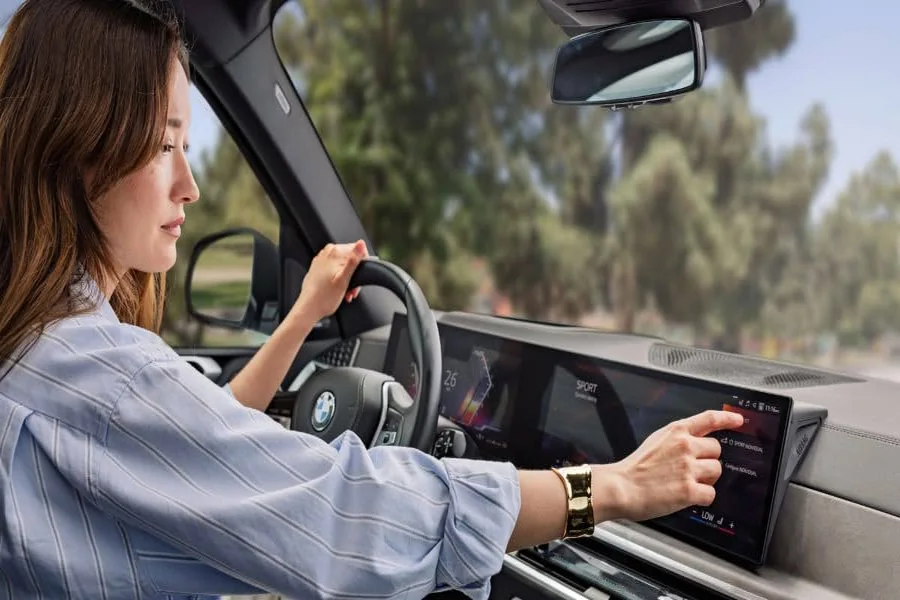
Driver assistance features are technologies that come preloaded into modern vehicles that assist the driver to see more, react quicker and avoid the common mistakes while driving on the road. They take advantage of a blend of sensors, cameras, radar and internal software to keep track of what is going on around the car in real time. If a possible danger is sensed, for example, a vehicle in the blind spot, or a sudden braking for a car in front, the system can warn the driver or, in some instances, it can implement limited measures, such as braking or steering. These systems are not intended to replace the driver. They act as a second set of eyes, working quietly in the background until they’re needed.
What Are Driver Assistance Features?
Many of these are grouped together under the term Advanced Driver Assistance Systems (ADAS) and are designed to decrease the likelihood of human error by the driver. Most crashes are caused by human error, whether it’s due to a brief lapse of attention at a red light or a moment of forgetfulness when checking your blind spot. These systems are capable of detecting things that a driver may not see.
A few examples are:
- Adaptive cruise control
- Lane keeping assist and lane departure warning.
- Automatic emergency braking
- Blind spot monitoring
- Parking assistance
All of these are focused on a particular driving situation. They form a hierarchy of safety net that does not replace but enhances the driver’s safety.
The Core Technology Behind Driver Assistance Systems
All of the driver assistance functions that are on offer are basically a three-part process: sense, process and respond. The car initially gathers data regarding the environment. It decodes the information with software. Lastly, it makes the choice of calling on the driver or intervening directly.
This occurs at all times and in split seconds. These systems are designed to operate at a higher speed than a human reaction time in many situations because a car will travel a considerable distance in a fraction of a second at highway speed. This is their speed that comes in handy in an emergency.
Sensors: The Eyes and Ears of the Vehicle
Sensors are the starting point for almost every driver assistance feature. Without accurate data about the surrounding environment, none of these systems would function. Most vehicles use a mix of the following:
- Cameras: Positioned around the vehicle, cameras read lane markings, traffic signs, and the position of nearby vehicles.
- Radar: Radar sensors measure the distance and speed of objects, even in poor visibility like fog or rain.
- Ultrasonic sensors: These are typically used for close-range detection, such as parking assistance.
- LiDAR: Found in more advanced systems, LiDAR creates a detailed 3D map of the car’s surroundings using laser pulses.
No single sensor type is perfect on its own. Cameras struggle in low light. Radar can miss small details. This is why most manufacturers combine multiple sensor types rather than relying on just one.
How the Onboard Computer Processes This Data
After collecting data with the sensors, the data must be made useful. This is where the computer which is installed in the vehicle comes into the picture. It performs algorithms that interpret raw data, recognize objects and anticipate what may occur next.
If, for instance, a vehicle is detected in front of the camera slowing down, the computer determines the deceleration rate and assesses it against the distance behind the vehicle. The system will issue a warning or brake automatically if this is the case and the gap is closing too fast. This calculation is done in real-time, sometimes many times a second, allowing the car to react to variations in situation in real-time as well.
A machine learning component is increasingly being used in this process. Large driving datasets are used to teach systems how to identify patterns (e.g., pedestrians getting off the curb, cyclists joining the flow of traffic). In time and with software updates, these systems will be better able to identify real world situations.
Common Driver Assistance Features Explained
It helps to look at a few individual features to understand how the sense-process-respond cycle plays out in practice.
Adaptive Cruise Control
This feature uses radar or camera sensors to maintain a set distance from the vehicle ahead. If traffic slows, the car automatically reduces speed. When the road clears, it accelerates back to the set speed.
Lane Keeping Assist
Cameras track lane markings on the road. If the vehicle starts to drift without a turn signal, the system gently steers it back or alerts the driver with a vibration or sound.
Automatic Emergency Braking
This feature constantly monitors the distance and speed of objects ahead. If a collision seems likely and the driver hasn’t reacted, the system applies the brakes to reduce impact speed or avoid the crash altogether.
Blind Spot Monitoring
Sensors mounted near the rear of the vehicle detect cars in adjacent lanes that aren’t visible in the mirrors. A warning light or sound alerts the driver before a lane change.
Each of these features operates independently, but many modern vehicles run them simultaneously, creating a more complete safety picture.
How These Systems Work Together (Sensor Fusion)
Individual sensors have blind spots and weaknesses. Combining data from multiple sources to form one more trusted view of the vehicle’s surroundings is known as sensor fusion. A camera may be able to confirm what detected by radar, and the ultrasonic sensors are able to detect gaps when other sensors are unable to detect it in close range.
This multi-layered system minimizes false alarms and boosts confidence in the system’s decision-making process. In the case of information that is sensed by radar, but not seen by the camera, the information might be considered less certain. If both sensors are in agreement, the system will respond more quickly and confidently.
Newer cars are significantly better than their predecessors in part due to the addition of sensor fusion. It’s more than just more sensors. It has to do with the effectiveness of the sensors communicating with one another.
Limitations of Driver Assistance Technology
Despite their benefits, driver assistance features are not foolproof. Understanding their limitations is just as important as understanding how they work.
- Heavy rain, snow, or fog can reduce sensor accuracy.
- Faded or missing lane markings can confuse lane-keeping systems.
- Sudden, unpredictable movements from other vehicles can be hard to anticipate.
- Systems can vary significantly in performance between manufacturers and models.
These limitations are why most automakers describe these features as “assistance” rather than “automation.” The driver is still expected to stay alert and ready to take control at any moment.
Tips for Using Driver Assistance Features Safely
Getting the most out of these systems means using them the way they were designed to be used. A few practical habits can make a real difference.
- Keep your hands on the wheel, even when adaptive cruise control or lane assist is active.
- Clean your sensors and cameras regularly, since dirt or debris can interfere with detection.
- Read your vehicle’s manual to understand what each feature does and doesn’t cover.
- Don’t rely on blind spot monitoring as a replacement for checking mirrors and glancing over your shoulder.
- Stay attentive during bad weather, since sensor performance can drop.
Treating these systems as a backup rather than a replacement for good driving habits leads to safer outcomes for everyone on the road.
The Future of Driver Assistance Systems
Driver assistance technology is continually evolving. These systems are becoming more powerful year after year as technology advances in the field of artificial intelligence, sensor accuracy and computing power. Some vehicles now have features such as automatic lane change, low effort parking systems, and predictive collision avoidance, which looks ahead of the collision.
Regulators and safety groups are also taking part, with their standards dictating the performance of these systems. Testing advances and the availability of more real-world data makes driver assistance features more consistent between makes and models in coming years.
The goal of full self-driving systems is different and more complex. Technologies such as driver assistance are a step toward that future, but they are designed with a clear limitation: The driver is still in control.
Final Thought
Driver assistance technology is the next chapter in a journey that involves sensors, cameras and intelligent software to enhance vehicle situational awareness. They’re not about to replace the driver, they’re about to help them out when they make a mistake, help them out when they react too slowly and help them out when they’re driving safely. Knowing how these work and their boundaries allows drivers to utilise them better. As the technology continues to advance, it will become easier to make sure you can benefit from each new safety add-on that’s introduced.