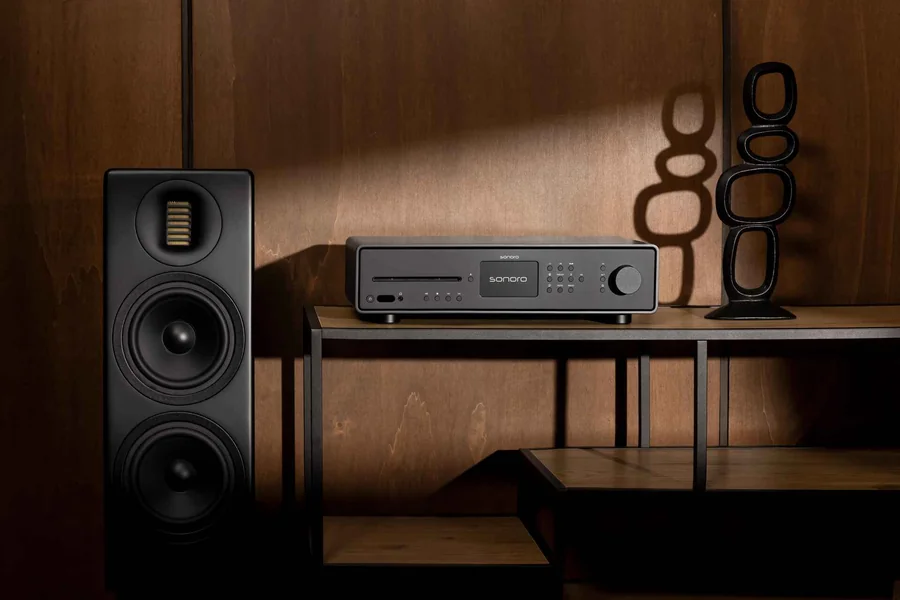
The comparison of an integrated amplifier vs receiver is primarily based on purpose and features. The integrated amplifier integrates the preamplifier and power amplifier into a single package, giving high-quality stereo output from a connected audio source. Many modern AV receivers also offer home theater functions, surround sound, video switching and HDMI, and they also provide amplification, but with features like a radio tuner. To put it simply, an integrated amplifier is typically a device that is used for two channel listening, with a receiver a more general entertainment center.
Integrated Amplifier vs Receiver: The Basic Difference
When first comparing an integrated amplifier and a receiver, they can be very similar. They both feature inputs, volume controls, speaker connections and amplification in a single box. The difference becomes more apparent on studying their functions.
An integrated amplifier is composed of two parts:
- A preamplifier
- A power amplifier
The preamp controls the input selection and volume. The power amp supplies the energy to the speakers. Combined in a single chassis, an integrated amplifier is easier to assemble than constructing a preamp and power amplifier combination.
A receiver does that simple amplification process and then incorporates a tuner as well. In the past a stereo receiver would consist of an AM/FM radio tuner, preamp and power amp.
Modern receivers can be a more encompassing term. An AV receiver, or AVR, is a receiver that is used for home theater and can accept multiple audio/video inputs. It can feature HDMI inputs, surround-sound processing, multiple digital audio inputs, room correction, and can support multiple speakers.
Thus the easiest division is:
Integrated amplifier = amplifier centered stereo system.
The receiver consists of the amplifier along with the tuner and a few entertainment elements (in AV receivers).
It’s important when selecting equipment, depending on how you’re going to listen.
What Is An Integrated Amplifier?
Integrated amplifier is basically designed for two channel audio. It is a favourite among those who wish to have a dedicated music player.
The unit is connected with a source like a CD player, turntable, a network streamer or a digital source. It receives that signal and boosts them up and sends them to the left and right speakers.
Additional inputs like digital, Bluetooth, USB or even network streaming are also common in modern integrated amplifiers. There are models with built-in digital-to-analog conversion (DACs), and there are models primarily analog focused.
The word “integrated” means that the preamplifier and power amplifier are combined into one.
There are a number of practical benefits to this design.
One, the number of boxes to purchase is reduced. No separate preamp/power amp needed. This can simplify the installation and operation of the system.
Secondly, there are less cables between components. This will help a stereo system remain simple and tidy.
Third, an integrated amplifier can be built for a two-channel application. The unit’s circuitry and power supply can be used to power a stereo pair of speakers, which is an option for manufacturers.
An integrated amplifier might be a very useful option for a traditional music setup.
What Is A Receiver?
A receiver is just an amplifier with extra features incorporated into a single chassis.
Traditionally, a Stereo receiver will have a radio tuner. This will enable users to tune into AM or FM radio without purchasing an FM tuner.
There are still listeners who wish to have a simple two channel system with radio included, and for these listeners, stereo receivers are still useful. They can also provide modern connections on the basis of the model.
AV receivers, on the other hand, are a different breed. It’s meant to be the main part of a home theater system.
An AV receiver can be used in conjunction with:
- Blu-ray players
- Game consoles
- Streaming devices
- Televisions
- Media players
- Turntables and other audio sources
It also supports surround-sound sound quality and can feed multiple speakers.
Several AV receivers have an HDMI switching feature so that multiple HDMI devices can be plugged into the receiver. The receiver will then pass video over to the TV or projector and perform audio.
This allows the AV receiver to be more versatile for those that watch movies, play games and listen to music with the same system in place.
But that additional feature comes with a lot of settings and features to learn.
Integrated Amplifier vs Receiver: Key Differences
The differences become easier to understand when you compare their main functions.
| Feature | Integrated Amplifier | Stereo Receiver | AV Receiver |
| Main purpose | Stereo music | Stereo music + radio | Home theater + music |
| Built-in power amplifier | Yes | Yes | Yes |
| Preamplifier section | Yes | Yes | Yes |
| AM/FM tuner | Usually no | Usually yes | Depends on model |
| Stereo speaker support | Yes | Yes | Yes |
| Surround sound | Usually no | Usually no | Yes |
| HDMI connections | Some models | Rare | Common |
| Video processing | Usually no | No | Yes |
| Multi-speaker home theater | No | No | Yes |
| Simplicity | High | High | Moderate |
| Typical focus | Two-channel audio | Stereo + radio | Audio/video systems |
Note that the table also provides the justification for why it is not a one-size-fits-all situation. They have various use-cases and follow different architectures.
If you are primarily listening to music from twin speakers, an integrated amplifier might be what you need.
A receiver might be more convenient if you want radio to be part of a stereo system.
An AV receiver will have functions that a typical integrated amplifier will not have if your system has a TV, game console, multiple speakers and surround sound.
Which One Should You Choose?
The optimal one is not the one identified by the name on the front panel, but instead depends on your setup.
Choose an integrated amplifier if you mainly listen to music
If you are primarily interested in listening to two channels, then an integrated amplifier is a good choice.
Will work with bookshelf speakers, floor-standing speakers, CD player, turntable or network streamer. It is possible to construct an unpolluted system without having to acquire a big box of discrete parts.
It’s especially good if you don’t require surround sound or video switching.
A turntable with a music streamer, an integrated amplifier, and two floorstanding speakers, for instance. If you’re not interested in home theater features, then there’s not much need for you to buy an AV receiver.
Choose a stereo receiver if you want built-in radio
If radio is a key aspect of your listening experience, a stereo receiver may be considered.
You have all the benefits of an integrated amp and a built-in tuner, all in one.
This might be suitable for an easy living room stereo system where one wants to change the source of the music but doesn’t need to introduce another component.
Choose an AV receiver for home theater
For a TV/ projector based system, an AV receiver is typically the better choice.
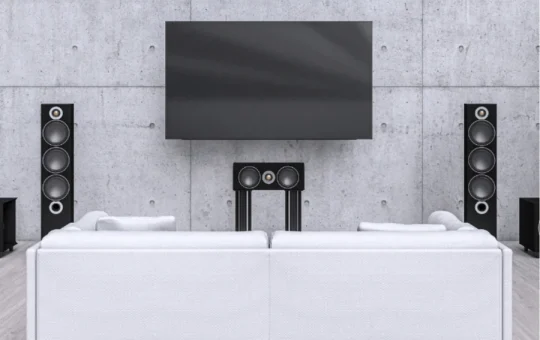
An example of such setup could be a home theater and it has a center speaker, front left and right speakers, surround, subwoofer, television, and multiple HDMI sources.
These can be managed by an AV receiver.
Think about your sources
It can also offer home theater capabilities such as surround processing and other capabilities not usually found in an integrated amplifier.
These functions may be more significant than just stereo sound if your priorities involve films, video games, and surround sound.
Sound Quality, Power, And System Matching
A streamer and CD player can be sufficient; an integrated amplifier may be enough in that case.
For those who have a TV, a gaming console, streaming box and disc player, an AV receiver might be useful when connecting all those devices.
Take into account if you have a DAC, phono preamp or other gear. These features are offered by some of the integrated amplifiers, others offer them as separate products.
This is an essential book to learn about sound and system matching.This is a must-read guide to sound and system matching.
One of the most frequently asked questions in the integrated amp vs receiver contest is if one of them is inherently superior sounding.
There is no easy answer.
The sound quality will vary depending on the product, speaker combinations, room, source, listening levels and system design. A integrated amplifier isn’t necessarily better just because it is stereo. Similarly, an AV receiver does not always sound bad when used for music.
It’s also important to consider the power ratings.
Common Questions About Integrated Amplifiers And Receivers
Is an integrated amplifier better than a receiver?
Both are not necessarily superior. An integrated amplifier, or an amplifier with input from the radio and/or larger home theater systems, is designed primarily for stereo use, whereas a receiver can support a wider range of home theater and radio applications.
Can an integrated amplifier be used for a TV?
Yes, as long as it has compatible inputs or the TV can offer an appropriate audio output. For systems that use multiple HDMI devices and surround speakers, though, an AV receiver is more convenient.
Can a receiver sound good for music?
Yes. A good stereo or AV receiver can deliver good music performance. The real outcome is subject to the individual receiver, speaker, room and source.
Does an integrated amplifier have a radio tuner?
Usually not. The typical stereo receiver will feature a tuner, and an integrated amplifier will specialize in amplification and source input.
Can an integrated amplifier power two speakers?
Yes. Stereo integrated amplifiers are made to drive a pair of speakers (L/R). Depending on the design, some models could have extra speaker connections.
Do I need an AV receiver for surround sound?
An AV receiver is typically one of the more often used devices for the home theater surround sound manager. It offers multi channel amplification and surround processing all in one.
Final Thoughts
Once you can determine what you want your audio system to do, it becomes much easier to decide on the integrated amplifier vs receiver.
A simple two-channel music system can be achieved by using an integrated amplifier. It is a preamp/power amp in one package and emphasizes the stereo output.
A stereo receiver is a radio that can be used with a tuner, and is suitable for those who wish to hear the radio in addition to other audio input.
The AV receiver takes it one step further. It is meant to control TV, DVD, video games, multiple sources, surround sound and multiple speakers.
Make a list of what you listen to first. Count the number of sources to connect. You may need radio, HDMI, video switching or surround sound. Next examine the requirements of the speaker and the available space.
Ultimately, the best one will be the right one for your system and your usage. A basic music system doesn’t necessarily have to be cluttered with home theater luxuries and a complete entertainment system can be enhanced with a receiver’s versatility.

1 Comments