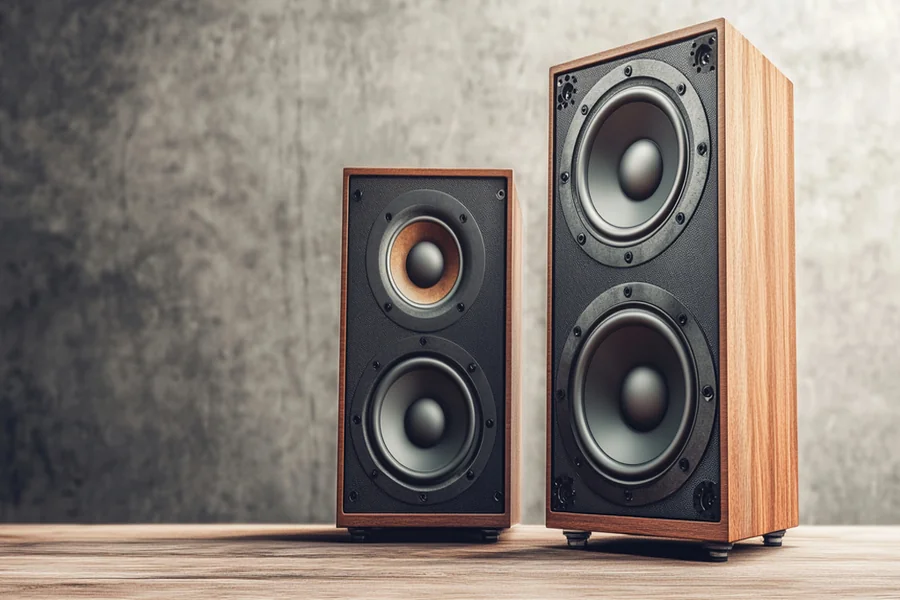
The difference between bookshelf and floorstanding speakers is one of the two major types of home audio speakers available, depending on the room’s space, the listener’s taste and setup. Bookshelf speakers are small, and typically require bookshelves, stands, or other firm surfaces. Floorstanding speakers are taller, larger cabinets that are used to stand on the floor and typically feature multiple drivers. For smaller spaces and flexible setups, bookshelf speakers may be a viable option, while floorstanding speakers offer more scale and depth of bass. The choice is dependent on the listener, room, amplifier size, listening style, and space.
When it comes time to decide on bookshelf or floorstanding speakers, it can be confusing, particularly if you are creating your first serious home theatre or stereo enclosure. Both types can provide great sound, but they go about it in different ways.
The loudest does not necessarily mean the better speaker. A small room may be an ideal fit for a small bookshelf model. If you’re seeking more projection and greater subwoofer output without having to go out and purchase a subwoofer right away, a floorstanding speaker might be more of a fit.
Here is a practical explanation of the differences between the two, to help you select the one best suited for your actual needs.
Bookshelf Speakers vs Floorstanding Speakers At A Glance
Bookshelf speakers are smaller in size and will be easier to install. Although the name and the term “stands”, they are well suited for dedicated speaker stands, where they can be positioned to enhance their performance. They normally feature a woofer along with a tweeter in a small cabinet.
The floor standing speakers or tower speakers will have higher cabinets and typically feature multiple drivers. The larger enclosure allows for more room for the designer to create bass and a larger overall presentation of the sound.
Let’s make a quick comparison:
| Feature | Bookshelf Speakers | Floorstanding Speakers |
| Size | Compact | Large and tall |
| Placement | Stands, shelves, desks | Directly on the floor |
| Bass | Usually moderate | Usually deeper and stronger |
| Room requirement | Small to medium rooms | Medium to large rooms |
| Portability | Easier to move | More difficult to move |
| Stand required | Often recommended | No |
| Amplifier demand | Often easier to drive | Can require more power |
| Cost | Usually lower initially | Usually higher |
| Subwoofer pairing | Common | Optional depending on model |
| Soundstage | Can be precise and focused | Often larger and more room-filling |
The key is that specs aren’t the only way to make sound quality. The design of the speaker, the quality of its drivers, the cabinet construction, room acoustics and placement all come into consideration.
What Are Bookshelf Speakers?
Bookshelf speakers are smaller, passive or active speakers that will fit into smaller areas. Unlike the traditional passive bookshelf speaker, which needs an amplifier or AV receiver, this option does not need one. Amplification is included in the speaker for active models.
They are more compact and are popular for apartments, small bedrooms, offices and small living rooms.
An easy error to make is to mount the speaker in a tightly packed book shelf. Books and objects around them can impact their sound. It’s often best to use dedicated stands, so that the speakers can be set at the correct height and distance.
If you wish to have a versatile audio system, bookshelf speakers are great to have on hand.
Common advantages include:
- Compact size
- Easier placement
- Lower initial cost
- Good stereo imaging
- Easy integration with a subwoofer
- Suitable for smaller listening rooms
- Easier to upgrade or reposition
They can also be an excellent introduction to hi-fi audio for the novice. The first few bookshelf speakers adds up and then play with subwoofer, improved amplifier, etc.
Compact cabinets have limitations, however. If you have a small speaker, you can’t get the same amount of air to move compared to a much larger speaker that is standing on the floor. It does not mean that it sounds bad. Basically, it means a decreased level of deep bass and maximum output.
What Are Floorstanding Speakers?
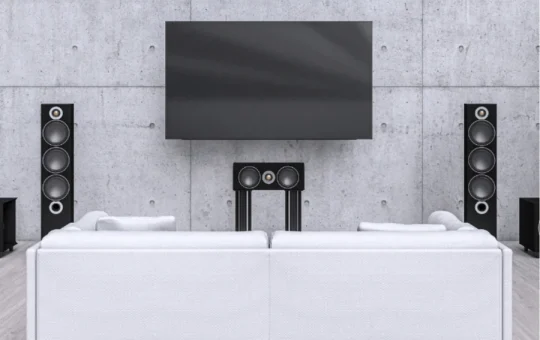
A floorstanding speaker is a tall cabinet that rests on the floor. Sometimes referred to as tower speakers.
Most of the floorstanding models have more than one driver. A standard design can have a tweeter, midrange driver, and a single (or more) woofer. Some designs have specific bass drivers or varying driver configurations.
The bigger cabinet offers greater internal volume for speaker system. This can contribute to lower bass and greater output when the design is worked out correctly.
In larger rooms where compact speakers might not achieve the scale desired, floorstanding speakers can be a good choice.
They’re also favoured by listeners who prefer a classic stereo system over heavy use of a subwoofer.
Typical advantages include:
- Deeper bass potential
- Higher output capability
- Larger sound presentation
- No speaker stands required – the audience must provide their own.
- Great choice for larger rooms
- Works well in 2 channel stereo systems
- May lessen the demand for a second subwoofer
There are pitfalls, however. A floorstanding speaker will more easily consume space in the visual and physical sense. They are also typically more costly than similar bookshelf speakers.
They aren’t guaranteed to be more efficient at producing sound due to a larger size. If it’s an ineffective tower speaker, it may not be as pleasing as a good compact speaker.
Bookshelf vs Floorstanding Speakers: Key Differences
The most useful way to compare the two is to look at how they behave in a real listening environment.
Room Size
One of the first rooms to consider is your room.
In smaller rooms, bookshelf speakers may be a more suitable option as they can deliver a clear stereo audio without filling up the room. If additional bass is desired, add a subwoofer later.
Floorstanding speakers can be more appropriate for medium and large rooms. They have the capacity to move more air which can lead to a larger presentation.
However, room size doesn’t always apply. If you have some space and can place the tower in the correct spot, a well designed tower can function in a smaller room. Similarly, if you have a competent subwoofer, bookshelf speakers can sound great in a big room.
Bass Performance
One of the most distinct differences is bass.
Bookshelf speakers are smaller and have smaller woofers and cabinets. They can get a great bass response for their size but it’s normally lower than larger towers.
With floorstanding speakers, there is more room for bass-producing drivers to resonate. Most can go down to lower frequencies and create more bass.
However, there is a huge difference between bass quality and bass extension. Too much bass isn’t necessarily good. The placement of rooms and acoustics can have a significant impact.
Soundstage and Imaging
There is a benefit to bookshelf speakers in terms of providing a good focused stereo image. They have relatively short drivers which can be placed close together (depending on design).
If set up properly, a great pair can produce a realistic soundstage that will be wider than the speakers themselves.
Excellent imaging is also possible with floorstanding speakers. They have more drivers and cabinets, which can produce more volume but it relies heavily on the speaker’s crossover and driver integration.
Amplifier Requirements
Another consideration is important before purchase, this is another area that can be checked.
There are speakers that are easy to drive and those that require more from an amplifier. Not all bookshelf speakers are necessarily easier to drive, either. Sensitivity and impedance specifications play important roles more than just the size.
Before purchasing, check:
- Speaker sensitivity
- Nominal impedance
- Recommended amplifier power
- Minimum impedance
- Your amplifier or receiver’s specifications
A compatible amplifier will enable the speakers to function correctly and prevent unnecessary strain on the system.
Space and Placement
Bookshelf speakers can be installed into a room with less trouble. Please note, however, that you might require speaker stands.
Unlike stand-mounted speakers, floorstanding speakers require more floor space, but not stands.
Regardless of the type of speaker you use, don’t place them closely against walls, unless the manufacturer says otherwise. The position of the speaker can greatly impact bass response, stereo imaging and balance.
Which Speaker Type Is Right For You?
The arguments for bookshelf speakers vs floorstanders are not the same. The best option is to use them wherever you want to use them, depending on how you listen.
Choose Bookshelf Speakers If:
- Your room is small to medium in size.
- You’re looking for a smaller system.
- You have a budget to stick to.
- You plan to use a subwoofer.
- Flexible placement is important to you.
- You would like to upgrade your system incrementally.
- Primarily listen to moderate levels.
Bookshelf speakers can play a well.Bookshelf speakers can also be perfect for secondary rooms, smaller stereo systems, and desktop audio.
Choose Floorstanding Speakers If:
- There is sufficient floor area.
- You own a medium/large listening room.
- You’d like to improve the bass response coming from the main speakers.
- You listen to music at greater volume.
- You are looking for a more amplified sound presentation.
- You don’t want to use speaker stands.
- You would prefer a standard full-range stereo system.
For many users who play rock music, electronic music, orchestral recordings, or any other music with a high amount of low frequency information, floorstanding speakers could provide the kind of presentation they need.
But, a great subwoofer can alter the equation. A well-designed bookshelf system, along with a well-integrated subwoofer, can deliver exceptional full range performance.
Buying Tips Before You Choose
Prior to making an investment, consider the entire system—not the speakers.
- Measure your room.
Understand what space you have available. Speaker size can seem petite when viewed online, but not in a space. - Check your amplifier.
Ensure that your amplifier or receiver will be able to handle the speakers you choose. - Consider a subwoofer.
A subwoofer may be a better upgrade for those who prefer bookshelf speakers but want to get that “woofer” bass sound. - Think about placement.
Don’t purchase a speaker without taking into account placement. The position can be a key element. - Set a complete budget.
For bookshelf speakers, remember that quality stands may be necessary. In both cases, allow space for cables, amplification and a subwoofer, if necessary. - Listen before buying when possible.
Online specs don’t necessarily specify exactly how a speaker is going to sound in your room. If at all possible, record on a variety of models with familiar music. - Do not focus only on size.
More doesn’t necessarily translate to better sound. The design of the object is more important than the size.
Final Thoughts
It really depends on the room, your type of listening, the budget and your sound system objectives.
One option is bookshelf speakers, which are compact and versatile. They come in particularly handy for smaller rooms and systems where a subwoofer can be used for the lowest frequencies. They can even produce fantastic stereo imaging without occupying the space.
If you have plenty of room and wish to have a bigger speaker with greater bass output, floorstanding speakers are a good option. These are great for listeners who wish to have a strong two channel system but don’t want to get a subwoofer right away.
The ideal way to match up the speaker to your room is to match the speaker to your room, not the size or appearance of the room. A well-staged bookshelf speaker can deliver more than you’d expect, and a good floor-standing speaker can offer you a good full-range performance.
Ultimately, it’s not about bookshelf speakers are better than floor standing speakers, but which category is better for your listening environment and priorities.

4 Comments