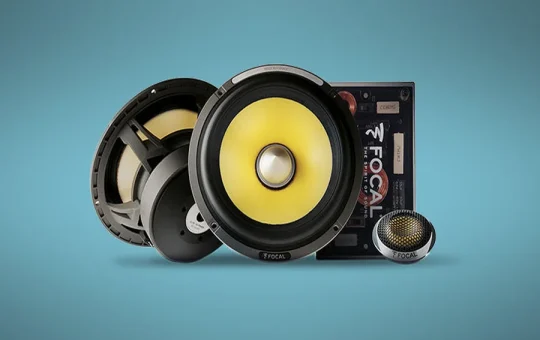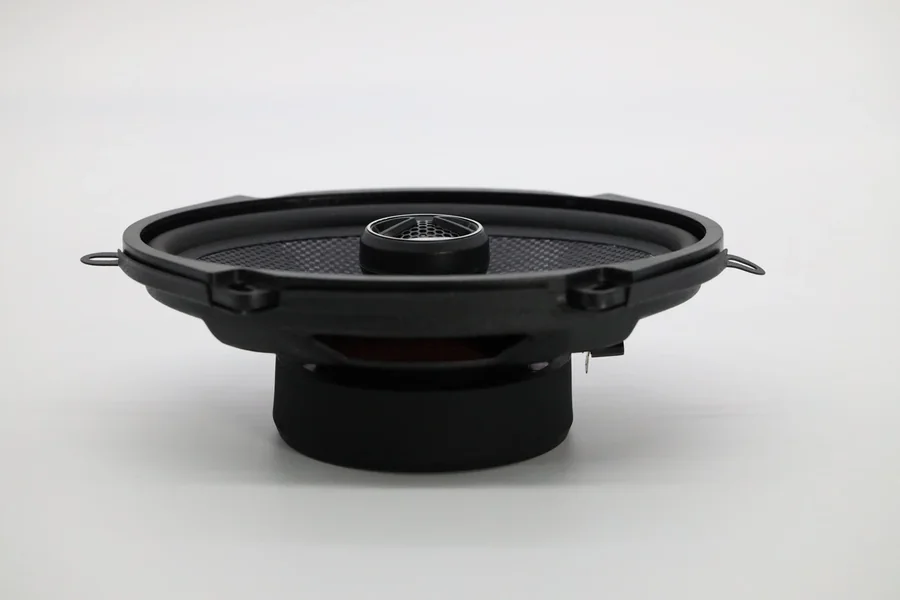
5×7 speakers are a favored speaker option for any driver looking to upgrade the audio system in their factory car without any significant modifications to the door panels or speaker mounts. Their oval shape provides more cone area in a limited space, which can result in greater fullness of sound than some smaller round factory speakers.
5×7 speakers provide a good compromise in size, power and ease of fit for many vehicles. Found in doors, rear side panels, dashboards and other factory locations (vehicle dependent).
The most significant benefit of 5×7 speakers is that they can deliver a discernible improvement in clarity and detail without straying far from the vast majority of the original speaker holes. They are helpful in both replacing parts on the OEM car as well as for a whole car audio upgrade.
What Are 5×7 Speakers?
5×7 speakers are oval automotive speakers measuring roughly five by seven inches. They are often used as factory replacements in cars and trucks, and are available in coaxial, multi-way, and component-style designs for improved music clarity, stronger midrange, and better overall sound.
5×7 Speakers Quick Facts
| Feature | Details |
| Speaker shape | Oval |
| Nominal size | About 5 x 7 inches |
| Common use | Car doors, rear panels, factory locations |
| Common designs | 2-way, 3-way, coaxial |
| Power handling | Varies by model |
| Impedance | Commonly 4 ohms |
| Best for | Factory upgrades and compact car audio systems |
| Main keyword | 5×7 speakers |
Before buying 5×7 speakers, always check the actual mounting depth, bolt pattern, impedance, and available space in your vehicle. Speaker size alone does not guarantee perfect fitment.
What Makes 5×7 Speakers Useful?
The oval shape of 5×7 speakers is beneficial because the manufacturer can get more cone surface than some smaller sized round speakers in the same spot. An increase in cone area can aid in midbass and overall performance.
Numerous 5 x 7 speakers are specifically developed direct or near-direct substitutes to original equipment speakers. This can decrease the need for cutting or custom brackets, or significant interior changes.
One of the other reasons why people opt for 5×7 speakers is convenience. A good coaxial one will integrate a woofer and tweeter into a single frame, and provide you with a hassle-free full-range upgrade from a single factory positioning.
Common Types of 5×7 Speakers
There are various types of 5×7 speakers, each of which is appropriate for a certain type of audio system.
The 2-way coaxial speaker is the most advertised 5×7 speaker. Usually they feature a single woofer cone and one tweeter centered.
Three-way 5×7 speakers can be enhanced by an additional small high-frequency driver or super tweeter. The objective is to split the frequency spectrum between several drivers.
Some high quality 5×7 speakers are made for more powerful systems, which might feature more powerful magnets, better cone materials, bigger voice coils, and better suspensions.
Sound Quality
The quality of the sound that can be expected from a 5×7 speaker is subject to a number of influences which include speaker design, installation quality, quality of the source unit, amplifier power, quality of the door treatment, and listening habits.
Good 5×7 speakers have the ability to sound better than worn or standard factory speakers when it comes to clearer vocals, better instrument separation, more treble detail, and better midbass.
But 5×7 speakers are generally not designed to be used in place of a subwoofer. They can get big enough that they can produce useful midbass, but for very deep bass, a separate subwoofer is usually required.
Power Handling
When comparing 5×7 speakers, power ratings should be taken into account. RMS power and maximum/peak power are two common numbers used.
RMS is more useful as it represents the amount of continuous power that 5×7 speakers can typically handle under normal circumstances.
When using only a factory radio select effective 5×7 speakers suitable for lower power levels. If you are using an external amplifier, match the RMS output of the amplifier reasonably similarly to the speaker’s RMS rating.
Sensitivity
Sensitivity gives you information about how efficiently 5×7 speakers can convert electrical energy to sound.
Using a higher sensitivity 5×7 speaker with a factory or low-powered aftermarket stereo can be beneficial.
Lower-sensitivity models can sound fantastic, but are better suited to an external amplifier.
Impedance
The most typical after market 5×7 speakers are 4 ohm speakers, but there are other impedances as well.
Always make sure to test the impedance of the original speaker system before installing factory 5×7 speakers. There are also some high quality factory audio systems that employ non-standard impedances.
Different impedances can alter the volume, amplifier load and overall system response, so proper matching can be a critical factor.
Frequency Response
Frequency response specs indicate the spectrum that 5×7 speakers are capable of reproducing.
A large range in publication is good but it is not a sign of good sound. Other factors that affect performance are installation, crossover design, speaker materials and tuning.
If music is needed for everyday driving, well-installed 5×7 speakers will perform well, providing useful mids and highs along with a good amount of midbass, which will make music sound fuller than the factory units.
Using 5×7 Speakers With a Factory Radio
One of the simplest modifications is to install 5×7 speakers with the existing radio.
Sometimes a 5×7 speaker may be as efficient and give better sound clarity without adding an amplifier.
The improvement could be more pronounced if the original cones are damaged, distorted, or from simple materials.
Using 5×7 Speakers With an Aftermarket Stereo
Better equalization, filtering, time alignment, or power of 5×7 speakers can be achieved with an aftermarket head unit.
If matched properly 5×7 speakers can sound better and cleaner than a weak factory speaker.
Use moderate EQ settings, and work from there up. This super bass boost may result in distortion or unnecessary strain on speakers.
Using an Amplifier
Adding an amplifier can help 5×7 speakers play louder and cleaner, especially when the amplifier provides stable RMS power.
Amplified 5×7 speakers can offer better headroom, stronger dynamics, and improved control at higher listening levels.
Always set amplifier gain correctly. Gain is not a volume control, and excessive gain can introduce clipping that may damage speakers.
Speaker Placement
Placement has a major effect on how 5×7 speakers sound inside a vehicle.
Front-door 5×7 speakers are often more important for creating a strong front soundstage because they are closer to the driver and passenger.
Rear 5×7 speakers can add fill and help rear passengers hear the music more clearly, but excessive rear volume may pull the soundstage behind the listener.
Door Installation
When installing 5×7 speakers in a door, make sure the mounting surface is solid and the speaker sits securely.
Loose mounting can create vibration, rattling, and reduced bass response. A foam gasket between the speaker and adapter can help seal the mounting surface.
For better results, 5×7 speakers can also benefit from door sound-deadening material that reduces panel vibration and road noise.
Mounting Depth
Mounting depth is one of the most important fitment checks for 5×7 speakers.
A speaker may match the nominal size but still be too deep for the available space behind the door panel.
Before ordering 5×7 speakers, measure the depth carefully and check for window tracks, braces, wiring, and other obstacles.
Speaker Adapters
Some vehicles need adapter brackets even when 5×7 speakers are close to the original factory size.
Adapters can help align bolt holes, create a stronger mounting surface, and position the speaker at the correct depth.
Quality adapters are especially useful when installing 5×7 speakers into locations that originally used a slightly different oval or round speaker size.
Wiring
Proper wiring is essential for getting the best performance from 5×7 speakers.
Keep positive and negative polarity consistent on both sides. Reversing polarity on one speaker can weaken bass and make the stereo image sound unfocused.
Plug-and-play harnesses can make 5×7 speakers easier to install without cutting the vehicle’s factory wiring.
Sound Deadening
Sound-deadening material can help 5×7 speakers perform more effectively by reducing door-panel resonance and outside noise.
A more stable door can improve perceived midbass and reduce rattles at higher volume.
You do not need to cover every inch of the vehicle. Strategic treatment around the speaker mounting area can already help.
5×7 Speakers vs 6×8 Speakers
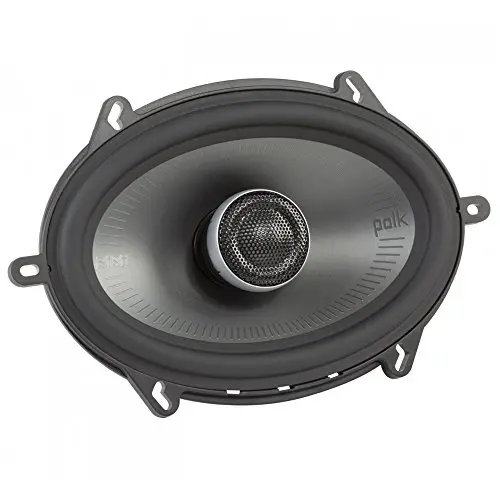
5×7 speakers and 6×8 speakers are both oval car speaker sizes, and some vehicles can use one with an adapter for the other.
The larger cone area of 6×8 models may provide slightly more output or midbass potential, but fitment depends on the actual mounting location.
Do not assume 5×7 speakers and 6×8 speakers are always interchangeable. Check the basket shape, screw positions, and mounting depth.
5×7 Speakers vs 6.5-Inch Speakers
Round 6.5-inch speakers are extremely common in aftermarket car audio, but 5×7 speakers may be easier to install in vehicles with oval factory openings.
A round speaker can offer more aftermarket choices, while these speakers may require fewer fitment modifications in compatible vehicles.
If your vehicle already uses an oval opening, keeping these speakers can be the simplest upgrade path.
Coaxial vs Component Systems
Coaxial these speakers combine multiple drivers into one basket, making installation simple.
A component system separates the woofer and tweeter so the tweeter can be positioned higher in the cabin.
For straightforward replacement, coaxial these speakers are usually easier. For more advanced sound staging, a component setup may offer greater tuning flexibility.
Best Uses
These speakers are particularly suitable for:
- Factory speaker replacement
- Front-door audio upgrades
- Rear speaker replacement
- Trucks and SUVs with compatible openings
- Daily-driver sound systems
- Factory-radio upgrades
- Aftermarket head units
- Modest amplified systems
- Budget-friendly car audio improvements
- Systems where major interior modification is undesirable
In these situations, these speakers provide a useful mix of convenient fitment and improved sound.
Advantages
One advantage of these speakers is their ability to fit many factory locations without extensive cutting.
Another advantage is that many models are sold as full-range coaxial speakers, which simplifies wiring and installation.
For drivers who want better clarity without building a complicated audio system, these speakers can be an efficient solution.
Limitations
These speakers have limits, especially in very deep bass reproduction.
Because the enclosure is usually the vehicle door or panel rather than a purpose-built speaker cabinet, performance can vary greatly from one car to another.
High-powered models may also require an amplifier to reach their full potential.
How to Choose the Right Model
When comparing these speakers, start with fitment and power requirements before focusing on brand or appearance.
Look at RMS power, sensitivity, impedance, mounting depth, frequency response, cone material, tweeter design, and warranty.
The best models for a factory radio may not be the same speakers you would choose for a powerful amplified system.
Buying Checklist
Before ordering these speakers, check the following:
- Confirm the factory speaker size.
- Measure available mounting depth.
- Check the factory impedance.
- Compare RMS power requirements.
- Decide whether you will use an amplifier.
- Check whether adapter brackets are needed.
- Confirm whether plug-in wiring harnesses are available.
- Make sure the door panel clears the speaker.
- Decide how much bass you expect.
- Read the manufacturer’s fitment information.
This checklist can help you choose speakers that match both your vehicle and your audio system.
Installation Guide
Installing these speakers generally involves removing the interior panel, disconnecting the old speaker, fitting the new speaker, connecting the wiring, and testing operation before reassembling the panel.
Always disconnect power when appropriate and follow vehicle-specific instructions.
After fitting the speakers, play familiar music at low volume first. Check both channels, verify polarity, listen for rattles, and confirm that windows and panels move normally.
Tuning Tips
After installation, tune the speakers gradually.
Start with bass, midrange, and treble controls near neutral. Make small adjustments while listening to several different songs.
If your stereo provides a high-pass filter, using one can protect the speakers from very low bass frequencies that are better handled by a subwoofer.
Are They Good for Bass?
These speakers can produce useful midbass, but expectations should remain realistic.
Door sealing, power, speaker design, and sound deadening all influence bass output.
For deeper bass, combine the speakers with a properly installed subwoofer instead of forcing the door speakers to reproduce frequencies beyond their ideal range.
Are They Good for Daily Driving?
For normal commuting, these speakers can be an excellent practical upgrade.
They can improve music, podcasts, navigation prompts, and hands-free audio without requiring a large custom system.
Good speakers are especially useful for drivers who want a cleaner, fuller sound while keeping the vehicle interior close to stock.
Who Should Buy Them?
Drivers with compatible factory openings are the most obvious candidates for these speakers.
They are also suitable for anyone who wants an easy replacement path, clearer audio, and better durability than old factory units.
If you prefer a straightforward installation and do not need extreme bass output, these speakers are worth considering.
Who May Want Something Else?
You may want another size if your vehicle does not have compatible mounting locations.
A larger round speaker or a custom component system may offer more choices for high-end builds.
People chasing very high output may also prefer larger drivers, dedicated midbass speakers, or a fully active system instead of relying only on these speakers.
Final Thoughts
These speakers remain a practical car audio option because they combine compact fitment, full-range designs, and broad usefulness in many factory speaker locations.
The right speakers can improve clarity, stereo balance, and everyday listening without requiring major interior changes.
Before buying, focus on fitment, RMS power, sensitivity, impedance, and installation quality. Well-matched speakers can provide a noticeable improvement over worn or basic factory audio.
FAQs
What are these speakers?
These are oval car audio speakers with a nominal size of about five by seven inches. They are commonly used in factory door and rear-panel locations.
Are these speakers good for car audio?
Yes. They can be a strong choice for factory replacement systems when the vehicle has compatible mounting locations and the speaker power requirements match the stereo.
Do these speakers need an amplifier?
Not always. Efficient models can work with a factory or aftermarket head unit, while higher-powered versions may perform better with an external amplifier.
Can these speakers produce bass?
They can produce useful midbass, but they are not a replacement for a dedicated subwoofer when deep low-frequency output is required.
Are they the same as 6×8 speakers?
No. Although some mounting locations can accept both with adapters, the two sizes have different nominal dimensions and may use different baskets or screw patterns.
Can I install these speakers myself?
Many people can install them with basic tools, a vehicle-specific guide, mounting adapters if needed, and the correct wiring harness.
What impedance should I choose?
Many aftermarket models are 4 ohms, but you should check the original system and amplifier requirements before buying.
What should I check before buying?
Before buying, confirm mounting depth, bolt pattern, impedance, RMS power, sensitivity, and whether your vehicle needs an adapter or wiring harness.