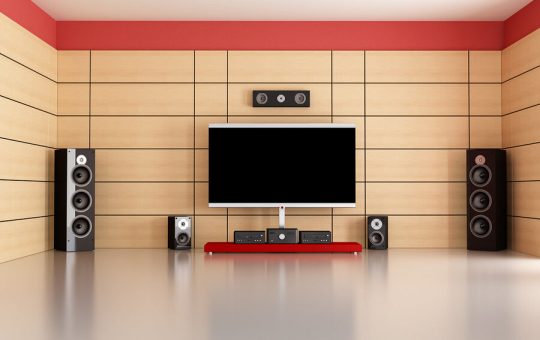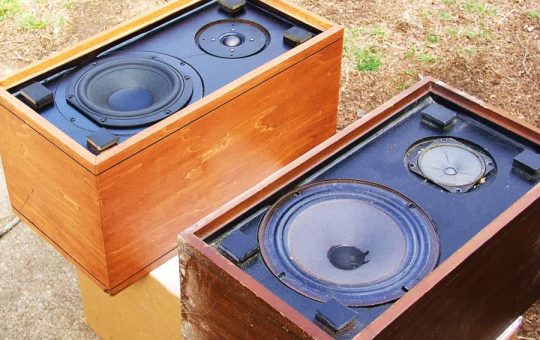
Box speakers are a type of speaker that has one or more speaker drivers enclosed in a box to create sound. They’re found in residential, automotive, office, studio, public and outdoor entertainment applications. The enclosure provides an added degree of control over air flow behind the speaker driver thus influencing bass response, clarity and overall performance.
There are several factors to consider when selecting the best box speakers: sound quality, box size, wattage, speaker enclosure, space and application. When buying an audio system, it is important to understand these features to make sure you choose an appropriate system without purchasing features that are not needed.
Types of Box Speakers
There are various speaker types, each tailored to fulfill particular listening requirements. Some target deep bass, others seek to play balanced sound and others are looking for easy portability.
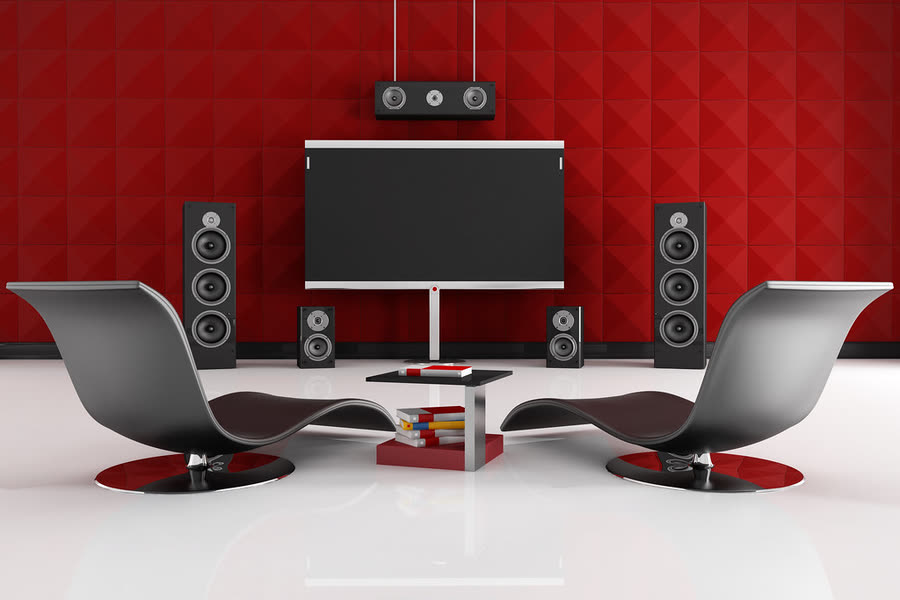
Related reading: 5×7 speakers, 4×10 speakers and best in-ceiling speakers.
1. Bookshelf Speakers
Bookshelf speakers are small speakers that fit on shelves, desks, and small rooms. They come in great variety and are used for music, desktop sounds and home theater.
However, a few of the bookshelf models offer detailed sound with a quality amplifier. However, they might not be as loud as larger floor-standing speakers or dedicated subwoofers.
2. Floor-Standing Speakers
Floor Standing Speakers: These are bigger models designed for placement on the floor. They have the capacity to hold several drivers, such as woofers, mids, and tweeters.
They work great for larger rooms, music lovers and home theater owners who demand a lot of sound. The sound quality is largely dependent on the quality of the drivers, cabinet design, room acoustics and amplifier suitability.
3. Portable Bluetooth Speakers
Portable Bluetooth speakers are wireless speakers that can be played through compatible devices. Most of the models have rechargeable batteries, small-sized enclosures, and easy-to-use controls.
They can be used for traveling, picnics, small gatherings and listening around the house. When buying, one should consider battery life, Bluetooth connectivity, durability, and sound performance.
4. Car Box Speakers
There are various speaker configurations available for use in car audio systems to enhance audio quality onboard a car. Some installations feature “enclosed” subwoofers that produce more low-frequency sound.
The enclosure should be the same size as the subwoofer and the area the vehicle has. Quality performance from a speaker can be compromised by an unsuitable enclosure.
5. Studio Monitor Speakers
Studio monitors are specifically engineered for audio production and mixing, as well as critical listening. Their goal is to accurately reproduce sound in order for the user to be able to detect problems in recordings and mixes.
Numerous studio monitors are enclosed and with built-in amplifiers. When choosing a pair, buyers should keep in mind the frequency response, size of the room, input connections, and listening position.
Important Features to Consider
When purchasing a box speaker, check out the specifications that relate directly to the sound quality and compatibility.
The configuration of the speaker and drivers.Speaker and Driver Configuration.
The size of the speaker can affect the dimensions of the enclosure and the possible sound quality of the enclosure, but larger speakers do not necessarily imply better. The caliber of the drivers, design and tuning of the enclosure also play a role.
A system that uses a dedicated woofer and tweeter can reproduce a broader range of frequencies than a single, small driver system (depending on the design).
Power Handling
Power handling is a speaker’s maximum ability to handle electricity under certain conditions. Manufacturers can offer continuous power ratings or RMS power ratings as well as peak power ratings.
When comparing products, it is important to pay attention to the continuous power range, amplifier compatibility, and not just the largest advertised wattage.
Frequency Response
Frequency Response indicates the frequency range of a speaker’s response. Bass frequencies are mapped to low frequencies, treble and detail to high frequencies.
Just because a wider frequency range is published, doesn’t mean it will sound good. There are also factors affecting the perceived quality, such as measurement methods, response variation, distortion, and listening conditions.
Compliance with Impedance and Amplifier.
Speaker impedance is measured in ohms and relates to the electrical load that a speaker places on an amplifier. Standard ratings are 4, 6 and 8 ohms.
Be sure to refer to the amplifier manufacturer’s recommended impedance range. An incompatible speaker load can result in overheating, protection shut down or damage to equipment.
Construction of enclosures, and the material they are made of.
Speaker cabinets can be constructed of MDF, plywood, plastic or any other material. The selection will depend on the application, the structural design, weight and the environment.
A robust enclosure that is not flammable is effective in suppressing unwanted cabinet vibrations. Appropriate use of proper sealing and internal bracing can enhance performance, as well.
Comparison of Common Speaker Types
|
Speaker type |
Best use |
Main advantage |
Main limitation |
|
Bookshelf |
Small rooms and desks |
Compact design |
Limited deep bass in many models |
|
Floor-standing |
Large rooms and home theaters |
High output potential |
Requires more space |
|
Bluetooth |
Travel and casual listening |
Portable and convenient |
Battery and size limitations |
|
Car subwoofer enclosure |
Vehicle bass systems |
Strong low-frequency output |
Needs suitable installation space |
|
Studio monitors |
Music production |
Designed for critical listening |
Room acoustics can affect accuracy |
Benefits of Using Box Speakers
Improved Sound Performance
A well-designed enclosure allows for control of the sound emitted by the front and rear of a speaker driver. This can result in better low-frequency response and minimize unwanted acoustic interference.
Depending on the driver, the dimensions of the cabinet, the type of enclosure and tuning, the actual result will differ.
Better Bass Response
Enclosure is an important factor in bass reproduction. Most sealed designs offer a tuned bass response and some ported designs can boost bass frequencies if the tuning is done correctly.
Both designs are not necessarily superior. Their choice depends on their preference for listening, space, and the acoustic design of the speaker.
Flexible Installation Options
There are various kinds of box speakers, both in size and the shape. There are models to choose from for shelves, walls, desktops, vehicle installations, or listening rooms.
This versatility allows for the creation of an audio system to fit a specific space and budget.
Different Audio Systems support is available.
Numerous speaker systems can be connected to amplifiers, receivers, televisions, computers and other audio equipment. The wireless models can also be Bluetooth-enabled or have other connection options.
Confirm inputs, power usage and connection requirements prior to purchase.
Sealed vs. Ported Speaker Enclosures
Two common enclosure designs are sealed and ported cabinets.
A sealed enclosure has no intentional acoustic port. A ported enclosure uses an opening or duct designed to work with the air inside the cabinet and the speaker driver.
|
Feature |
Sealed enclosure |
Ported enclosure |
|
Cabinet design |
Closed air volume |
Includes a tuned port |
|
Bass behavior |
Often controlled and gradual |
Can provide greater output near tuning |
|
Construction |
Generally simpler |
Requires careful port tuning |
|
Space requirements |
Depends on the design |
Port dimensions may increase cabinet size |
|
Common applications |
Home audio and subwoofers |
Home audio, car audio, and subwoofers |
The best enclosure depends on the driver’s specifications and the desired acoustic response. Simply copying cabinet dimensions from another speaker may produce poor results because drivers have different electrical and mechanical characteristics.
How to Choose the Right Box Speakers
1. Identify Your Main Purpose
First, determine the location(s) for the speakers. The features that a desktop system needs are different from those of a car subwoofer or a home theater system.
Portable models work well for outdoor listening whereas studio models are more suitable for sound editing and mixing.
2. Establish a realistic budget.
Don’t look at the price of the speaker only; take the entire system cost into account. Additional equipment such as amplifier, cables, stands, mounting hardware and/or installation services may be required, depending on the model.
A well-balanced system, using compatible components, may serve you better than the whole price on one specification.
3. Check the Available Space
Check the installation space prior to buying. Take into account cabinet width, height, depth, ventilation needs and clearances from walls.
The positioning of the speakers can have a major impact on both bass response and stereo imaging. Follow manufacturer’s placement recommendations if available.
4. Review Specifications Carefully
Compare frequency response, sensitivity, impedance, power-handling, connections and dimensions. When possible, find good demonstration or product measures.
Don’t just buy by wattage, diameter of the driver or by claims stated in advertising.
5. Listen Before Buying When Possible
Listening tests will give you a good idea of tonal balance, clarity, bass response, and level of performance at your preferred volume. Speakers should be compared, if possible, under similar conditions.
It has to do with personal preference but it can be more useful to make comparisons under consistent listening conditions.
Common Mistakes to Avoid
Sometimes buyers choose speakers for their appearance and/or the advertised power. This can result in less than stellar returns.
Be careful of these pitfalls:
- Ignoring amplifier compatibility.
- Purchasing a speaker that is too big for the space in which it will be installed.
- Thinking the small portable speaker can have the same deep bass as a large subwoofer.
- Using an unsuitable enclosure for a car subwoofer.
- Installing speakers for no consideration of room acoustics.
- Ignoring the types of connection and cost of installation.
- Basing the assumption on a higher price is synonymous with better sound.
If you carefully compare your requirements and needs, you can save some expenses.
Maintenance Tips for Better Performance
Good maintenance ensures long-lasting speaker performance.
Regularly clean and dust the cabinets. Do not allow indoor speakers to get wet, extremely hot or cold, or in direct sunlight (unless they are built to withstand it).
Inspect any cables and connectors for damage and make sure the amplifier is working within the speaker’s limits. Do not use for extended periods with audible distortion.
Follow the manufacturer’s battery-care and water-resistance instructions for portable and outdoor models.
Final Thoughts
Whether you’re setting up a home entertainment system, upgrading your car’s audio, creating a professional setup, or taking it with you, box speakers are versatile options that can be tailored to any need. The selection will vary according to enclosure design, driver quality, amplifier compatibility, space and application.
Check the specs thoroughly and think about how the system will sound in your listening space before buying it. By choosing a speaker system that complements your acoustic environment, you can achieve clear sound, excellent bass response, and trouble-free performance without breaking the bank.
FAQs
1. What are box speakers used for?
Box speakers reproduce audio in homes, cars, studios, offices, and outdoor settings. Their enclosure supports the acoustic performance of the speaker driver.
2. Are box speakers better than open speakers?
A properly designed enclosure can improve bass response and control unwanted sound interference. However, performance depends on the complete speaker design and intended application.
3. Which enclosure is better for bass?
Both sealed and ported enclosures can produce strong bass. Ported designs may provide greater output near their tuning frequency, while sealed designs often offer a more gradual low-frequency response.
4. How many watts should box speakers have?
There is no single ideal wattage. Consider room size, desired listening volume, speaker sensitivity, amplifier capability, and continuous power ratings.
5. Can I connect box speakers directly to a television?
Some active speakers can connect directly to a television through compatible inputs. Passive speakers generally require an appropriate amplifier or receiver.
6. How can I improve the sound of my speakers?
Use compatible equipment, position the speakers carefully, manage room reflections, and avoid excessive volume that causes distortion. Proper setup can improve performance without replacing the entire system.