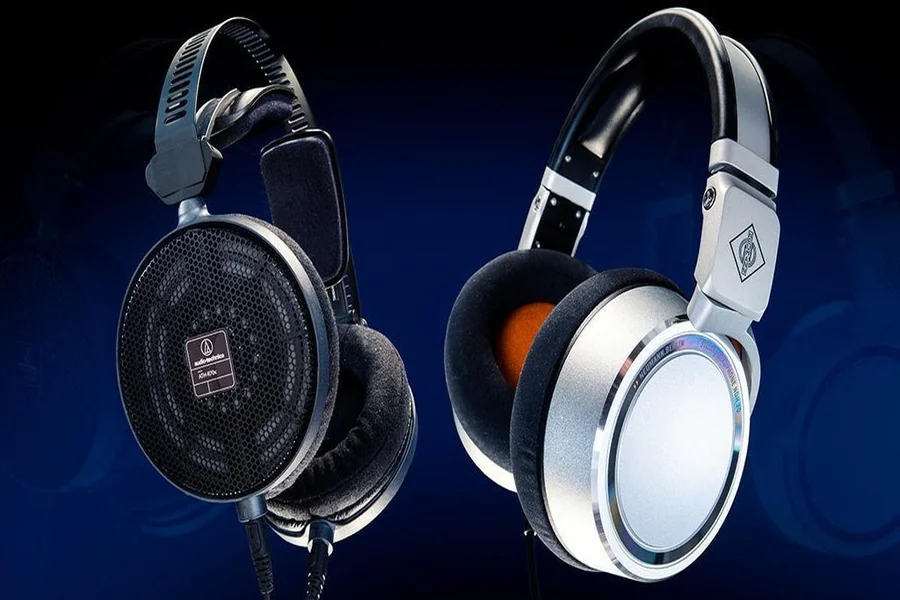
One of the most crucial considerations to take into account prior to purchasing a new set of headphones is open-back vs closed-back headphones. They are both capable of giving good sound, but are created for very different listening environments.
Open-back headphones are headphones with a hole where air and sound can flow through the ear cups. This typically engenders a broader and more natural listening experience. Closed-back headphones close the back of the ear cups to prevent outside noise from penetrating the cup, while blocking sound from escaping into the room.
That is quite straightforward in some instances. Open-back headphones are frequently used for serious listening, gaming and home listening. Closed-back headphones are generally more suitable for use when people are around you, in the office, when recording, and in the car.
There is no right or wrong design. It really depends on the location of listening, the amount of isolation desired and the desired type of sound presentation.
Why Are Headphones Designed Differently?
Though the exterior of the headsets might be the same, the internal design of the driver can make or break the listening experience.
Each manufacturer utilizes open-back and closed-back designs because they are tailored to the needs of the different listeners.
Open-back headphones: There is more exposure to the air which results in a more natural soundstage.
- Noise isolation – If there is a lot of noise around, closed-back headphones block it and noise from the headphones doesn’t travel outwards.
- A closed-back ear cup can help closed-back headphones deliver more powerful, audible bass response.
- Airflow – Open designs typically provide more room around the ears to breathe, making them more comfortable for extended listening times.
- Privacy – Closed-back headphones can be preferable where you do not want others to hear the music playing around you.
The best headphones for each situation vary.
What Are Open-Back Headphones?
Open back headphones feature ear cups with vents (or grills/ open holes) to allow air to pass through the back of the headphone driver.
This implies that the sound is not totally trapped within the ear cup.
This typically leads to a larger, more natural-sounding room.
The two headphones are called “open-back” headphones because they can be heard more like a speaker is speaking in a room than from directly beside the ear.
This design is particularly popular among audiophiles, music producers and gamers who want to hear small details and a more realistic sense of space.
The cons are that they are not very isolating as open back headphones are.
The ear cups may allow for outside noise to leak into the listener and people around them can hear what you are listening to.
What Are Closed-Back Headphones?
Closed-back headphones are headphones that feature sealed ear cups that prevent most of the sound from leaking back through the driver.
Designed to provide a more isolated listening space.
It can drown out noise around you, and provide some privacy for your music.
The closed back headphones are very popular as they are effective in many commonplace scenarios.
These are typically utilized during commuting, traveling, music recording, working in an office or simply listening in a spot where other people are present.
Closed-back headphones can also resonate more bassful due to the closed design of the ear cup.
But the soundstage can sound tighter than with many open back designs.
Open-Back vs Closed-Back Headphones Comparison
The easiest way to understand the difference is to compare the main features.
| Feature | Open-Back Headphones | Closed-Back Headphones |
| Ear Cup Design | Ventilated or open | Fully or mostly sealed |
| Soundstage | Wide and spacious | More focused and intimate |
| Noise Isolation | Low | Moderate to high |
| Sound Leakage | High | Low |
| Bass Feel | Natural and open | Usually stronger and more impactful |
| Airflow | Better | Lower |
| Best Environment | Quiet rooms | Home, office, travel and public places |
| Recording Use | Limited | Very good |
| Gaming | Excellent for immersion | Good for noisy environments |
| Privacy | Low | High |
The biggest difference is isolation.
Open-back headphones allow sound to move freely in and out of the ear cups, while closed-back headphones create a much more controlled listening environment.
Which Headphones Have Better Sound Quality?
It’s not just open or closed ear cups, but quality of sound.
Open-back headphones, however, may have some merits for critical listening purposes.
They may also be constructed to decrease the likelihood of pressure building up in the ear cup. This can result in a more natural and attractive appearance.
Vocal will feel less restricted, instruments will sound more distinct and the soundstage will feel broader.
Closed-back headphones can sound great, too.
In fact, many high-end studio headphones or top-notch wireless headphones adopt the closed design.
The difference is primarily in the presentation.
Closed-back headphones usually will sound more direct and enclosed, while open-back headphones will sound more spacious and airy.
Which Design Has Better Bass?
Generally, closed-back headphones will give more of a bass response.
The sealed ear cups capture more of the energy at the low frequencies around the ears.
This can give bass a deeper and more powerful sound, particularly in electronic music, hip-hop and movies.
Open-back headphones can also deliver good bass response, though it may not be as powerful.
The bass may have a more natural and controlled sound, without the pressure, instead.
That is why certain listeners will favor open-back headphones when mixing or analysis listening.
The bass sound might not be as overpowering, but it can be more convenient to hear what the low frequencies sound like in the recording.
Which Headphones Have a Wider Soundstage?
Out of the two, it’s typically the open-back headphones.
Soundstage is the width, depth and roomfulness of the sound as it circumscribes the listener.
The instruments can sound like they’re coming from different directions around you, rather than from inside your head, as long as you have a good open-back headphone.
Ideal for hearing orchestral performances, live recordings and detailed acoustic tracks.
It can also be beneficial for gaming purposes.
When you can hear footsteps, vehicles or other sounds around you, a wider soundstage can help you understand where they’re coming from.
Closed-back headphones still offer a very good directional audio, although the presentation is more intimate to the listener.
Are Open-Back Headphones Better for Gaming?
Open-back headphones are often a strong choice for gaming in a quiet environment.
Their wide soundstage can make games feel more immersive.
Directional sounds may also feel easier to place.
For competitive games, being able to identify the direction of footsteps or gunfire can be useful.
However, there is a major limitation.
Open-back headphones do not block much background noise.
If you are gaming in a room with a television, conversations or other sounds, those noises can interfere with the experience.
Closed-back headphones may therefore be better for gaming in shared or noisy environments.
Which Headphones Are Better for Music Production?
Both designs are commonly used in studios, but they usually serve different purposes.
Closed-back headphones are often used while recording.
A singer can wear closed-back headphones while listening to a backing track without much sound leaking into the microphone.
This is important because headphone leakage can interfere with a clean recording.
Open-back headphones are often preferred for mixing and detailed listening.
Their more spacious sound can make it easier to judge instrument separation, stereo placement and overall balance.
Many producers use both types.
Closed-back headphones handle tracking and recording, while open-back headphones are used later for mixing and checking details.
Which Headphones Are Better for Commuting?
Closed-back headphones are the better choice for most commuters.
Open-back headphones allow traffic, conversations and other environmental sounds to enter the ear cups.
They also leak music outward.
That makes them inconvenient on buses, trains and airplanes.
Closed-back headphones provide much better passive isolation.
Many modern closed-back headphones also include active noise cancellation.
This can reduce steady background noise such as aircraft engines, train sounds or air conditioning.
For travel and commuting, closed-back headphones are generally the more practical option.
What Is Sound Leakage?
Sound leakage happens when people around you can hear the audio coming from your headphones.
Open-back headphones leak a significant amount of sound because their ear cups are intentionally open.
At moderate or high volume, someone sitting nearby may clearly hear your music.
Closed-back headphones keep most sound inside the ear cups.
There can still be some leakage at very high volumes, but it is usually much lower.
This makes closed-back headphones much better for offices, libraries, airplanes and other shared environments.
Are Open-Back Headphones More Comfortable?
They can be.
Because open-back headphones allow air to move through the ear cups, less heat may build up around the ears.
This can be useful during long listening sessions.
Closed-back headphones trap more heat because the ear cups are sealed.
After several hours, some users may notice their ears becoming warmer.
However, comfort also depends on several other factors.
Headphone weight, clamping pressure, ear pad material and ear cup size can matter just as much as the open or closed design.
A comfortable closed-back headphone can still be easier to wear than a poorly designed open-back model.
Can Other People Hear Open-Back Headphones?
Yes.
This is one of the biggest disadvantages of open-back headphones.
Because the ear cups are vented, sound escapes outward.
At normal listening levels, someone sitting close to you may hear parts of the music.
At higher volume, the leakage can become very noticeable.
That is why open-back headphones are usually best used in private rooms.
They are not ideal for libraries, offices or shared bedrooms.
Closed-back headphones are much better when privacy matters.
Do Closed-Back Headphones Block All Noise?
No.
Closed-back headphones reduce outside noise, but they do not automatically eliminate it.
The physical ear cup provides passive noise isolation.
How effective that isolation is depends on the shape of the ear pads, how well they seal around your ears and the materials used.
Some closed-back headphones also include active noise cancellation.
Active noise cancellation uses microphones and electronic processing to reduce certain types of background sound.
It works especially well with steady low-frequency noise such as engines and air conditioning systems.
Even then, no headphone completely removes every sound around you.
Open-Back vs Closed-Back Headphones for the Office
Closed-back headphones are generally better for office environments.
They help block conversations and reduce sound leakage.
This is useful when working near coworkers.
Open-back headphones may create a more comfortable and natural listening experience, but everyone nearby may hear your music.
They also allow office sounds to enter easily.
There are exceptions.
If you work alone in a private office, open-back headphones can be an excellent option.
In an open-plan workplace, closed-back headphones usually make more sense.
Open-Back vs Closed-Back Headphones for Home Listening
Home listening is where open-back headphones become especially attractive.
If you have a quiet room and do not need to worry about disturbing other people, an open-back design can offer an extremely spacious listening experience.
Music can feel less confined.
Instruments may appear more naturally separated.
Long listening sessions can also feel more comfortable because of improved airflow.
Closed-back headphones are still useful at home when you share the room with other people or need to block background noise.
The environment often determines which design works better.
Are Open-Back Headphones Worth It?
Open-back headphones can be worth buying if soundstage, detail and natural presentation are your main priorities.
They are particularly useful for people who listen in quiet rooms.
They can also be excellent for gaming, mixing, acoustic music and critical listening.
However, they are not very versatile outside the home.
Their lack of isolation makes them difficult to use in public.
Sound leakage can also disturb people around you.
For many listeners, open-back headphones work best as a second pair rather than the only headphones they own.
Are Closed-Back Headphones More Versatile?
Usually, yes.
Closed-back headphones can be used in a much wider range of environments.
You can use them at home, in an office, on public transport or while traveling.
They are also suitable for recording.
Their isolation makes them especially useful when background noise is present.
This versatility is one reason most mainstream consumer headphones use closed-back ear cups.
Wireless headphones with active noise cancellation are also almost always closed-back because the sealed design improves isolation.
Who Should Choose Open-Back Headphones?
Open-back headphones are a good choice if you mainly listen in a quiet room and care about spacious sound.
They may be especially suitable for:
- Audiophiles
- Home listeners
- Competitive gamers
- Music producers
- Mixing engineers
- Classical music listeners
- People who prefer a wide soundstage
They work best when outside noise and sound leakage are not major concerns.
Who Should Choose Closed-Back Headphones?
Closed-back headphones are better when isolation, privacy and versatility matter most.
They are commonly suitable for:
- Commuters
- Travelers
- Office workers
- Students
- Recording musicians
- DJs
- People living in shared spaces
- Listeners who prefer stronger bass impact
For most people looking for a single pair of headphones for everyday use, closed-back headphones are usually easier to live with.
Can You Own Both Types?
Yes, and many headphone enthusiasts do.
The two designs solve different problems.
A closed-back headphone can be used for travel, work and noisy environments.
An open-back headphone can stay at home for focused listening or gaming.
Using both types allows you to choose the headphone that best matches the situation instead of forcing one design to handle everything.
This can be especially useful for musicians, gamers and people who spend many hours listening to audio.
Final Thought
The choice between open-back vs closed-back headphones comes down to how and where you plan to listen.
Open-back headphones generally provide a wider, more natural soundstage with better airflow. They work especially well for home listening, gaming and critical audio work in quiet spaces.
Closed-back headphones provide better noise isolation, lower sound leakage and a more private listening experience. They are better suited for commuting, travel, office use and recording.
Neither design is universally better.
If you want spacious sound and mainly listen at home, open-back headphones can be the better fit. If you need privacy, isolation and flexibility, closed-back headphones are usually the more practical choice.
The best headphones are not simply the ones with the most advanced specifications. They are the ones that match your listening environment and the way you actually use them.