If you've ever looked at an audio interface, turntable or a guitar rig, you've probably heard the term ‘preamp. When you see an audio interface, a turntable or a guitar rig, you'll see the word ‘preamp'. So, what is a preamp and is it needed?
In summary, a preamp (preamplifier) is a circuit which boosts a very weak signal and enables it to be used by other circuits. That one job has an impact on the loudness, cleanliness and clarity of your sound.
You will get the answer to the question: what does a preamp do? in simple words from this guide. You'll discover what it is and how to locate one and choose the right one.
For related advice, read our guides to choosing an amplifier for your speakers, integrated amplifier versus receiver and buying a used turntable.
What Does a Preamp Do? The Simple Answer
A preamp is an electronic circuit which amplifies a small audio signal. It is used before a power amplifier, mixer or recording device as it comes early in the signal chain.
All the signals from microphones, electric guitar pickups and turntable cartridges are extremely small. Below average input needs. They are amplified to a common signal level used by most audio gear, known as “line level” by the preamp.
If it wasn't for that boost, you'll be able to hear the faint sound. If you want to adjust it later by turning up, you'll jack up the hiss of the background noise, as well.
For more recording and audio know-how, see Sound On Sound.
So, what is a preamp used for, anyway? It amplifies the signal, aids in minimizing distortion between the source and the next device, and can frequently give you tone control options.
What Does a Preamp Do in a Signal Chain?
The signal chain is the path that your sound takes from the source to your ears. The typical route is as follows:
- Source (microphone, guitar, or turntable)
- Preamp
- A mixer, audio interface or power amp.
- Speakers or headphones
Different strengths of signals are emitted by each source. In a dynamic microphone, the level of the sound is very low, in the millivolt range. The line voltage is much higher, up to 1 volt. The preamp does that.
The amount of boost, or increase in gain, is indicated in decibels (dB). The higher the gain, the stronger the signal, but if it is too high the signal will be distorted.
Additionally, noise can also be enhanced if the signal is amplified early. There is a slight noise of each cable or component. If you boost a low signal in the beginning, it remains high above that noise. So, the answer to the question “what does a preamp do?” is a bit more complex than “make things louder.”
Another job is to go about impedance matching. Impedance is what a device is opposed to when it comes to the audio signal. It's a good preamp that will display the correct input impedance so the source's sound and clarity are not compromised. If your electric guitar pickup is an electric instrument, there is a point for which a high input impedance is desired so as to maintain your guitar's tone and gain.
What Does a Preamp Do for Different Types of Gear?
The function of the core job remains the same, but each type of preamp is designed to work with a particular source.
Microphone Preamps
A microphone pre-amplifier is used to amplify the weak signal from a microphone. Most Audio Interfaces and Mixers have a mic preamp built into them, with a gain knob.
Many also supply phantom power (usually 48 volts). Condenser mics need a power source to operate. Don't do this with a dynamic mic, and some ribbon mics won't be able to handle it. You can do this by testing your microphone.
Guitar and Bass Preamps
The signal from the instrument pickups is a low level, high impedance signal. The level and impedance will be raised by a preamp or direct box, to match with the next unit.
The power stage boosts the signal to the appropriate level and sends the signal to the speaker in a guitar amp, while the preamp stage is used to adjust the gain and initial tone. Acoustic guitars with piezo pickups are sometimes accompanied by a small preamp that is used to adjust the volume and tone.
Phono Preamps
A turntable cartridge generates an extremely low level of signal. Also records were obtained with less bass and higher treble to fit the grooves on the record. This is known as RIAA equalisation.
There are two functions of a phono preamp. It increases the signal and this is the inverse of equalization that will send music balanced. There are receivers and turntables that have one built-in. Some require an additional box.
Moving-coil cartridges generally have lower signal output than moving-magnet cartridges, so are more likely to need higher gain.
Home Stereo Preamps
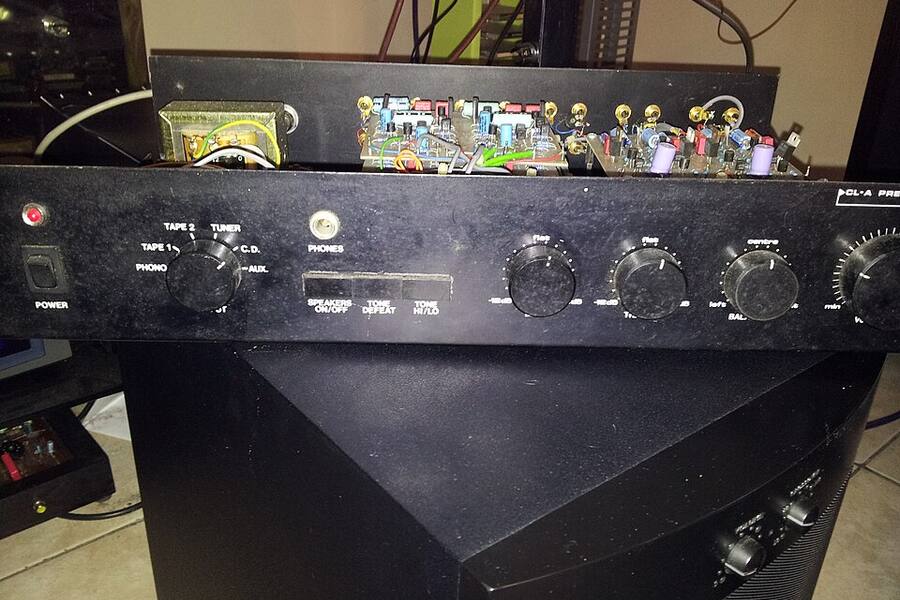
In hi-fi, what is the purpose of a preamp? It acts as the control centre. You can choose an input, volume control and in some instances tone/bass level. This then sends a line level signal to a power amp.
Obviously, both parts can be combined together in a single box, known as “integrated amplifier”. If you're looking to make individual upgrades, you can opt for a separate preamp.
What Does a Preamp Do to Your Sound?
Many preamps are intended to be "clean" and "transparent. They are not intended to add colour – they give the sound its authenticity.
Others add character. When a harmonics is applied to a tube preamp, it is known for its "warmness. Clean and precise are common terms used to describe solid-state designs. These are general trends and it isn't the type of design that is important, it's good design. Taste is subjective, there is no one type that works for everyone.
Gain setting is important as well. If the signal is too high, it will clip and the clipping will sound harsh and flat. After recording, there is no way to edit the recording later. There is some headroom to allow for peaks that are not as loud as the maximum level.
Adding to that, the noise that the preamp generates is included. With quiet sources (like ribbon mics and moving-coil cartridges) low-noise designs are most important.
What Does a Preamp Do Compared With a Power Amp?
Both parts amplify, but they do different tasks. A preamp raises a small signal to line level and handles controls. A power amp takes that line-level signal and supplies the power needed to drive speakers.
|
Preamp |
Power amp |
|
|
Main job |
Boost, match, and control the signal |
Drive the speakers |
|
Input |
Weak signals (mic, phono, instrument) or line level |
Line level |
|
Output |
Line level |
High power for speakers |
|
Place in chain |
Early |
Last, before the speakers |
A preamp alone cannot power passive speakers. Powered speakers, audio interfaces, and integrated amplifiers already contain both stages.
Do You Need a Preamp?
Many people ask themselves, “what is a preamp good for?” when they look into “what does a preamp do”. This will depend on the signal your gear is transmitting and the signal your next gear is expecting.
If you're unsure, it's likely you need a preamp if:
- You don't have a phono stage in your turntable and a phono input in your amp.
- You want to connect an XLR output-less device to an XLR microphone.
- You're plugging into a passive or piezo instrument pickup and are looking for a powerful matched signal.
- You'd like to get a certain sound or greater control over the sound.
If you are using powered speakers or an amp and streaming from a phone or laptop, then it is likely that you don't need one. The signal is at line level already. MPs are also a part of a good audio interface.
One quick word of advice: Look in your manuals and input labels. The names of the inputs indicate their type of signal; “phono”, “mic” and “line”.
How to Choose a Preamp
“What does a preamp do for my source?” is the first question that needs to be asked with the use of a preamp. A microphone, a turntable and a guitar have many features that are required. Next compare these points:
- Input type: Moving-magnet, Moving-coil, Mic, Instrument or Line.
- Gain range: sufficient boost of your softest source.
- Low noise: Check the specifications for low noise.
- Feedback control: Used by condenser microphones.
- Outputs: Make sure to be compatible with the next device.
- Character of sound: Clean and neutral, or coloured.
- Budget: An adequate entry level unit will work just fine. Upgrade when a definite limit is met.
Final Thoughts
But, what is a pre amplifier? It's situated at the start of the sound chain and purifies the sound for the rest of the chain. It boosts low level sources to a usable level, is impedance matched and can change tone.
There's no need to buy expensive equipment to get benefits. Know the attributes of your source and choose and set the preamp type and gain accordingly.
The first step is done correctly, the rest will sound good.
FAQs
What does a preamp do in simple words?
A preamp makes a weak audio signal stronger so other gear can use it. It also helps match devices and may give you tone controls.
Does a preamp make sound louder?
It raises the signal level, but the final loudness depends on your power amp and speakers too. The preamp’s job is to deliver a strong, clean signal to the next stage.
Is a preamp the same as an amplifier?
No. People often use “amplifier” to mean a power amp. A preamp boosts and controls the signal, while a power amp drives the speakers. An integrated amplifier has both.
Do I need a preamp for a turntable?
Yes, you need a phono preamp. It can be built into the turntable, built into your receiver, or sold as a separate unit. Check your setup before buying one.
What does a preamp do for a microphone?
It boosts the microphone’s weak signal to line level so a mixer, interface, or recorder can use it. Many mic preamps also supply phantom power and a gain control for setting your level.
Can a preamp improve sound quality?
It can, if your current preamp is noisy or poorly matched to your source. A better one can lower noise and give cleaner gain. It cannot fix a poor microphone, a bad room, or weak speakers.